+86 18920794106
Leave Your Message
-
Contact WhatsApp
-
 Contact Phone
-
 Contact Email
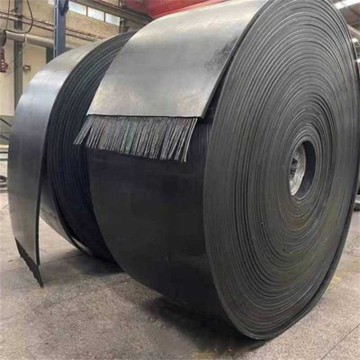
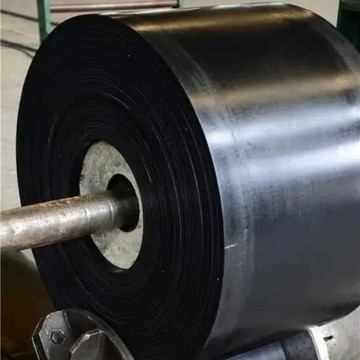
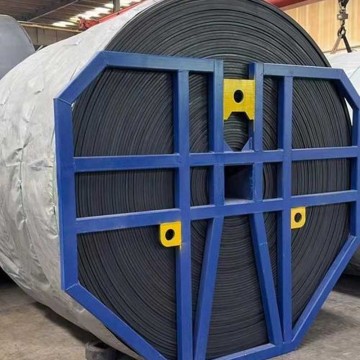
In the rapidly evolving landscape of industrial automation and material handling systems, polyester rubber conveyor belts have emerged as critical components for stabilizing and supporting belt movement across diverse applications. These engineered solutions combine the tensile strength of polyester fabric with the durability and flexibility of rubber compounds, creating a synergistic material that addresses the complex demands of modern conveying systems.
Polyester rubber conveyor belts represent a technological advancement that has revolutionized how industries approach material transportation. Unlike traditional cotton or nylon belts, polyester-reinforced variants offer superior dimensional stability, reduced elongation under load, and exceptional resistance to moisture and chemical exposure. These characteristics make them indispensable in industries ranging from mining and agriculture to food processing and logistics.
The global conveyor belt market has experienced significant growth, with polyester rubber conveyor belts capturing an increasingly substantial market share. Industry analysts project the conveyor belt market to reach approximately $7.2 billion by 2027, with polyester-based solutions accounting for nearly 35% of this valuation. This growth trajectory is driven by several converging factors that underscore the critical importance of belt stabilization and movement support.
Manufacturing facilities worldwide are experiencing unprecedented pressure to optimize operational efficiency while minimizing downtime. Polyester rubber conveyor belts directly address these concerns through their enhanced stability characteristics. The polyester fabric core provides longitudinal reinforcement that prevents excessive stretching, while the rubber cover layers ensure optimal friction and load distribution. This combination results in belts that maintain consistent tracking and tension over extended operational periods.
The conveyor belt industry is witnessing several transformative trends that are redefining expectations for stabilization and support capabilities. Smart conveyor systems equipped with IoT sensors are becoming increasingly prevalent, enabling real-time monitoring of belt tension, alignment, and wear patterns. Polyester rubber conveyor belts are uniquely positioned to integrate with these technologies due to their consistent performance characteristics and predictable behavior under varying load conditions.
Research and development efforts are focusing on enhancing the interface between polyester fabric and rubber compounds. New adhesion technologies utilizing modified rubber formulations and advanced fabric treatments are producing belts with improved delamination resistance and extended operational lifespans. These developments are particularly significant for heavy-duty applications where belt failure can result in substantial production losses.
Nanotechnology is also making inroads into conveyor belt manufacturing. The incorporation of nano-scale additives into rubber compounds is enhancing wear resistance, reducing friction, and improving thermal stability. These advancements enable polyester rubber conveyor belts to operate effectively in increasingly demanding environments, from high-temperature processing facilities to abrasive material handling applications.
Environmental sustainability has become a paramount concern across industrial sectors. Polyester rubber conveyor belts are evolving to meet these expectations through several initiatives. Manufacturers are developing belts using recycled polyester fibers derived from post-consumer plastic bottles, significantly reducing the environmental footprint of belt production. Additionally, bio-based rubber compounds are being integrated into belt formulations, decreasing reliance on petroleum-derived materials.
Up to 40% decrease in maintenance requirements compared to traditional belts
Service life extension of 30-50% in typical industrial applications
Lower total cost of ownership through improved efficiency and longevity
In mining operations, conveyor belts must transport massive volumes of abrasive materials over extended distances, often traversing challenging terrain with significant elevation changes. Polyester rubber conveyor belts excel in these environments due to their exceptional tensile strength and resistance to impact damage. The stabilization characteristics of polyester reinforcement prevent belt sag between idler rollers, ensuring consistent material flow and preventing spillage.
Underground mining applications present unique challenges, including high humidity, exposure to chemicals, and space constraints that necessitate tight belt curves. Polyester's moisture resistance prevents the degradation that plagues natural fiber belts in these conditions, while the flexibility of rubber compounds allows for the tight radius turns required in confined spaces. Modern polyester rubber belts designed for mining applications incorporate steel cord reinforcements in combination with polyester fabric layers, creating hybrid structures that optimize both longitudinal strength and transverse flexibility.
Food safety regulations and pharmaceutical manufacturing standards impose stringent requirements on conveyor belt materials. Polyester rubber conveyor belts designed for these sectors utilize FDA-approved rubber compounds that resist bacterial growth and withstand frequent cleaning with aggressive sanitizing agents. The dimensional stability of polyester reinforcement is crucial in these applications, as belt misalignment can lead to product contamination or equipment damage.
Temperature control is another critical consideration in food processing. Polyester rubber belts maintain their structural integrity across wide temperature ranges, from freezing operations to high-temperature baking processes. This thermal stability ensures consistent belt tracking and tension, preventing the operational disruptions that can compromise product quality and safety.
The explosive growth of e-commerce has placed unprecedented demands on logistics and distribution centers. Conveyor systems in these facilities must handle diverse package sizes and weights while maintaining high throughput rates. Polyester rubber conveyor belts provide the stability necessary for automated sorting systems, where precise belt positioning is essential for accurate package diversion and routing.
The low elongation characteristics of polyester reinforcement enable the use of longer conveyor runs without intermediate drive stations, reducing system complexity and maintenance requirements. This is particularly valuable in large distribution centers where conveyor systems may span hundreds of meters. Additionally, the consistent friction properties of rubber cover materials ensure reliable package accumulation and release in zero-pressure accumulation systems.
Proper belt tension is fundamental to stable conveyor operation. Polyester rubber conveyor belts require lower initial tension compared to natural fiber alternatives due to their minimal elongation characteristics. This reduced tension requirement translates to lower stress on conveyor structure and drive components, extending equipment service life and reducing energy consumption.
The relationship between belt tension and elongation is governed by the modulus of elasticity of the polyester fabric. High-quality polyester fabrics exhibit elastic moduli in the range of 10-15 GPa, providing excellent resistance to stretch under operational loads. This stiffness must be balanced against the need for flexibility in belt splicing and installation, requiring careful selection of fabric construction and rubber compound properties.
Belt mistracking is a leading cause of premature wear and operational disruptions. Polyester rubber conveyor belts contribute to improved tracking through their dimensional stability and consistent transverse stiffness. However, proper belt tracking also depends on conveyor structure alignment, idler condition, and loading practices.
Modern tracking systems incorporate sensors and automated adjustments to maintain optimal belt alignment. Polyester rubber belts respond predictably to these adjustments due to their consistent mechanical properties, enabling more effective automatic tracking control. The integration of RFID tags and embedded sensors within polyester rubber belts is an emerging trend that enables continuous monitoring of belt position and condition, facilitating predictive maintenance strategies.
The future of polyester rubber conveyor belts lies in the integration of smart technologies and advanced materials. Researchers are developing belts with embedded fiber optic sensors that can detect stress concentrations, temperature variations, and wear patterns in real-time. These intelligent belts will enable predictive maintenance strategies that minimize unplanned downtime and optimize replacement schedules.
Additive manufacturing technologies are also beginning to influence conveyor belt production. 3D-printed rubber compounds with tailored properties may enable the creation of belts with variable characteristics along their length, optimizing performance for specific sections of a conveyor system. Similarly, advances in textile manufacturing are producing polyester fabrics with engineered property gradients that enhance belt performance in transition zones and high-stress areas.
As industries continue to prioritize automation, sustainability, and operational efficiency, polyester rubber conveyor belts will remain at the forefront of material handling innovation. Their unique combination of stability, durability, and adaptability positions them as essential components in the conveyor systems of tomorrow, supporting the seamless movement of materials that underpins modern industrial society.