


 +86 18920794106


0102030405


High-Quality EP Conveyor Belts from China Suppliers - Durable, Flexible, and Impact-Resistant Factory Solutions
Key Features & Applications
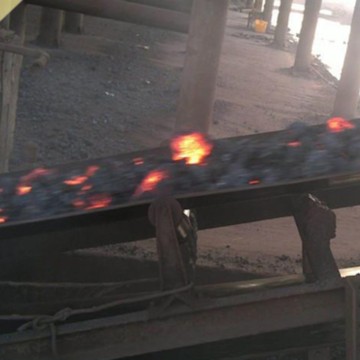
- Good heat resistance and heat stability
- Moisture-resistant and insect-proof
- Good dimensional stability
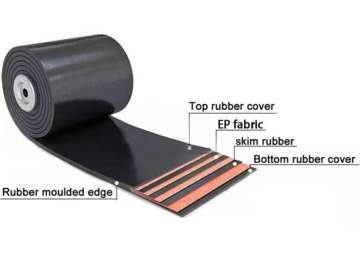
- Suitable for material transportation with large load, high speed, and medium/long distance
Strength Series Specifications
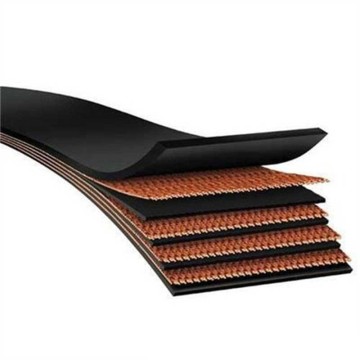
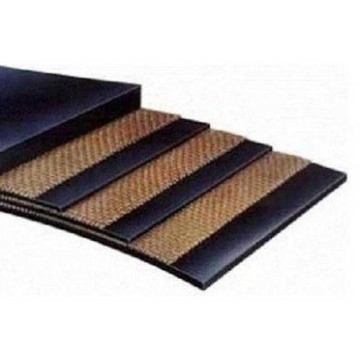
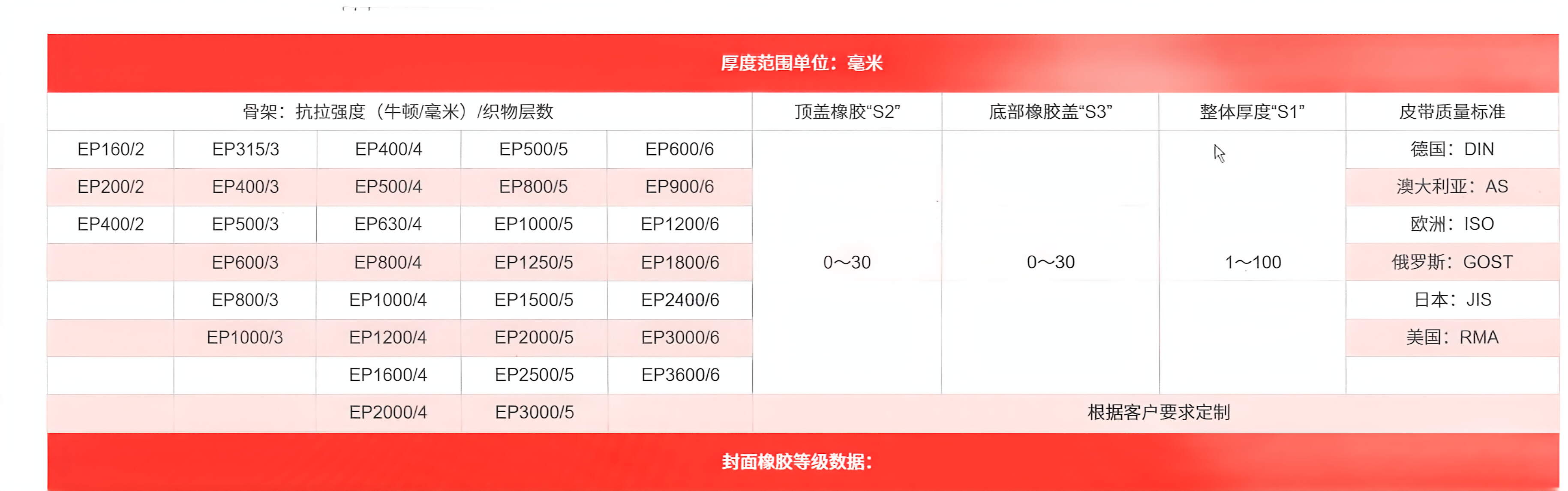
The values represent the longitudinal tensile strength of a single layer of canvas (N/mm). When multiple layers are stacked (e.g., EP800/4), it represents the total strength of the combined fabric layers (e.g., 4 layers = 800 N/mm).
EP100
EP125
EP150
EP200
EP250
EP300
EP400
Technical Specifications & Standards
The longitudinal tensile elongation at break of the full thickness shall not be less than 10%, and the longitudinal reference force elongation of the full thickness shall not be greater than 4%.
| Specification Item | Required Value / Performance Standard |
|---|---|
| Average bonding strength between fabric layers | Not less than 4.5 N/mm or not less than 5 N/mm |
| Bonding strength (Cover thickness 0.8-1.5mm) | Not less than 3.2 N/mm (or not less than 4.5 N/mm depending on standard) |
| Bonding strength (Cover thickness > 1.5mm) | Not less than 3.5 N/mm (or not less than 5 N/mm depending on standard) |
Cover Adhesive Performance Levels
The rate of change in tensile strength and elongation at break after aging for each grade is between -25% and +25%.
Grade H (Strong Scratch Resistance)
- • Tensile strength: ≥ 24 MPa
- • Elongation at break: ≥ 450%
- • Abrasion: ≤ 120 mm³
Grade D (Strong Abrasion Resistance)
- • Tensile strength: ≥ 18 MPa
- • Elongation at break: ≥ 400%
- • Abrasion: ≤ 100 mm³
Grade L (General)
- • Tensile strength: ≥ 15 MPa
- • Elongation at break: ≥ 350%
- • Abrasion: ≤ 200 mm³
Frequently Asked Questions
What are the primary performance advantages of EP conveyor belts?
EP conveyor belts offer excellent heat resistance, heat stability, moisture resistance, and insect protection. They also feature outstanding dimensional stability, making them highly suitable for transporting materials under large loads, at high speeds, and over medium to long distances.
What do the values in the EP strength series (e.g., EP100, EP800/4) represent?
The numbers represent the longitudinal tensile strength of a single layer of canvas in N/mm. For composite stacked belts, such as EP800/4, it indicates that the total longitudinal tensile strength of the 4 combined fabric layers is 800 N/mm.
What are the elongation specifications for these conveyor belts?
The longitudinal tensile elongation at break of the full thickness must not be less than 10%, and the longitudinal reference force elongation of the full thickness must not be greater than 4%.
What is the minimum bonding strength required between the layers?
The average bonding strength between the fabric layers must not be less than 4.5 N/mm or 5 N/mm. The bonding strength between the cover layer and core layer ranges from a minimum of 3.2 N/mm to 5 N/mm depending on the thickness of the cover layer.
How are the performance levels of the cover adhesive classified?
They are classified into three grades: Grade H for strong scratch resistance (tensile strength ≥ 24 MPa, elongation ≥ 450%, abrasion ≤ 120 mm³), Grade D for strong abrasion resistance (tensile strength ≥ 18 MPa, elongation ≥ 400%, abrasion ≤ 100 mm³), and Grade L for general use (tensile strength ≥ 15 MPa, elongation ≥ 350%, abrasion ≤ 200 mm³).