+86 18920794106
Leave Your Message
-
Contact WhatsApp
-
 Contact Phone
-
 Contact Email
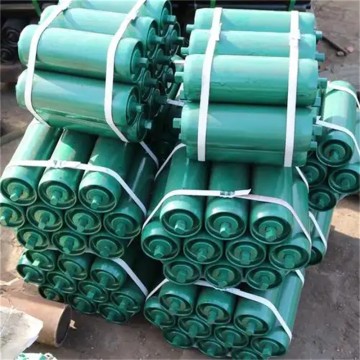
In the modern industrial landscape, conveyor idlers play a crucial role in material handling systems, particularly in long-distance and high-tension load-bearing applications. These essential components are the backbone of efficient bulk material transportation across mining operations, cement plants, power stations, and port facilities worldwide.
Conveyor idlers for long-distance high-tension load bearing must meet stringent requirements including load capacity exceeding 1000kg per idler set, operational speeds up to 5.0 m/s, and service life expectations of 50,000+ hours in harsh environments.
The global conveyor idler market has experienced significant growth, driven by expanding mining operations and infrastructure development. Current industry data indicates that long-distance conveyor systems (exceeding 5km) now account for approximately 35% of new installations in the mining sector. These systems demand specialized idlers capable of withstanding continuous high-tension loads while maintaining operational efficiency.
Modern conveyor idler technology has evolved to address challenges specific to long-distance applications. High-tension load-bearing idlers now incorporate advanced bearing technologies, improved sealing systems, and optimized shell designs that reduce rotational resistance by up to 40% compared to conventional designs. This evolution directly impacts operational costs, with reduced energy consumption and extended maintenance intervals.
The conveyor idler industry is witnessing several transformative trends that are reshaping long-distance material handling:
Smart Monitoring Integration: Next-generation idlers incorporate IoT sensors that monitor temperature, vibration, and rotational speed in real-time. This predictive maintenance capability reduces unplanned downtime by up to 60% in long-distance conveyor operations.
Advanced Materials Engineering: The development of composite materials and specialized rubber compounds has enhanced idler performance in extreme conditions. Modern HDPE (High-Density Polyethylene) shells combined with precision-engineered steel shafts provide superior load distribution while reducing overall system weight by 25-30%.
Energy Efficiency Optimization: Low-friction bearing assemblies and aerodynamic shell designs minimize rolling resistance, contributing to energy savings of 15-20% in long-distance conveyor systems. This is particularly significant in operations running 24/7, where energy costs represent a substantial portion of operational expenses.
Mining Operations: In underground and open-pit mining, conveyor idlers must handle extreme loads while operating in dusty, humid, and corrosive environments. Long-distance systems transporting iron ore, coal, or copper concentrate require idlers with enhanced sealing systems rated IP66 or higher. Recent installations in Australian iron ore mines feature idler systems supporting belt widths up to 2400mm, carrying loads exceeding 8000 tons per hour over distances of 15-20 kilometers.
Port and Terminal Facilities: Maritime bulk handling facilities utilize specialized idlers designed for coastal environments where salt spray and humidity accelerate corrosion. Stainless steel components and specialized coatings extend service life to 8-10 years even in these challenging conditions. Modern port installations increasingly employ impact idlers at loading points, capable of absorbing shock loads up to 3 times the normal operating tension.
Leading conveyor idler manufacturers now guarantee performance standards including: bearing life L10 exceeding 100,000 hours, shell runout tolerance within 0.5mm, and dynamic load ratings 2.5 times the static load capacity. These specifications ensure reliable operation in the most demanding long-distance applications.
Cement and Power Generation: These industries require idlers that can withstand elevated temperatures (up to 120°C) and abrasive materials. High-tension applications in cement plants often involve inclined conveyors with angles up to 18°, demanding specialized troughing idler sets with precise alignment capabilities to prevent belt mistracking.
The engineering of high-tension load-bearing idlers involves sophisticated calculations balancing multiple factors. The idler spacing, typically ranging from 1.2m to 3.0m for carrying idlers and 2.5m to 3.5m for return idlers, must be optimized based on belt tension, material density, and conveyor speed. In long-distance systems, proper idler selection can reduce belt sag to less than 1% of the idler spacing, crucial for maintaining alignment and preventing spillage.
Bearing selection is particularly critical in high-tension applications. Modern conveyor idlers utilize sealed-for-life bearings with C3 internal clearance, pre-loaded with synthetic grease formulated for extreme pressure and temperature ranges. The bearing arrangement must accommodate both radial loads from the belt tension and axial loads from belt tracking forces.
The conveyor idler industry is poised for significant advancement with several emerging technologies on the horizon. Magnetic bearing systems, currently in pilot testing, promise virtually friction-free operation with maintenance intervals exceeding 100,000 hours. Self-powered monitoring systems utilizing energy harvesting from idler rotation will enable comprehensive condition monitoring without external power requirements.
Artificial intelligence and machine learning algorithms are being developed to predict idler failure patterns based on operational data, potentially reducing unexpected failures by up to 80%. These systems analyze vibration signatures, temperature trends, and rotational patterns to identify developing problems weeks before actual failure occurs.
Environmental sustainability is driving innovation in idler manufacturing, with recycled materials now comprising up to 40% of modern idler components without compromising performance. This trend aligns with broader industry goals of reducing carbon footprint while maintaining operational excellence.
Proper installation and maintenance of conveyor idlers in long-distance high-tension applications directly impacts system reliability and operational costs. Industry best practices recommend comprehensive alignment checks during installation, with tolerances maintained within ±2mm across the entire conveyor length. Regular inspection intervals should be established based on operating conditions, typically ranging from monthly visual inspections to quarterly detailed assessments in demanding applications.
Predictive maintenance programs utilizing vibration analysis and thermal imaging have proven effective in identifying developing problems before catastrophic failure. Studies show that implementing such programs can reduce maintenance costs by 25-35% while improving overall system availability to above 98%.
Integration of IoT sensors and AI-powered analytics for predictive maintenance and real-time performance monitoring in long-distance conveyor systems.
Development of eco-friendly materials and energy-efficient designs reducing carbon footprint while maintaining high-tension load capacity.
Advanced composite materials and specialized coatings extending service life in extreme environments and high-tension applications.
Low-friction bearing technologies and aerodynamic designs achieving 15-20% energy savings in long-distance conveyor operations.
Improved sealing systems and corrosion-resistant materials ensuring 50,000+ hour service life in harsh industrial environments.
Self-aligning systems and automated monitoring reducing manual intervention and optimizing performance in high-tension applications.
Comprehensive conveyor solutions for every industrial application