+86 18920794106
Leave Your Message
-
Contact WhatsApp
-
 Contact Phone
-
 Contact Email
In the demanding world of underground mining operations, particularly in fire-risk environments, the selection of appropriate conveyor belt systems represents a critical decision that directly impacts operational safety, efficiency, and regulatory compliance. Cold-resistant conveyor belts designed specifically for fire-risk underground environments have emerged as an essential technology, combining advanced material science with stringent safety standards to protect both personnel and assets in some of the most challenging industrial conditions on Earth.
Underground mining operations face a unique dual threat: extreme cold temperatures that can cause conventional rubber compounds to crack and fail, combined with constant fire risks from combustible materials, electrical equipment, and spontaneous combustion events. This combination demands specialized conveyor belt solutions that maintain flexibility and strength at sub-zero temperatures while providing superior flame resistance.
The global underground mining conveyor belt market has experienced significant growth, driven by increasing demand for minerals, coal, and precious metals, coupled with deeper mining operations that present more extreme environmental conditions. According to industry analysis, the specialized conveyor belt segment for extreme environments is projected to grow at a CAGR of 5.8% through 2030, with cold-resistant and fire-resistant variants representing the fastest-growing subsegment.
Underground mining operations in regions such as Russia, Canada, Scandinavia, Alaska, and high-altitude South American mines routinely encounter temperatures ranging from -20°C to -40°C (-4°F to -40°F). Simultaneously, these environments contain multiple ignition sources including electrical equipment, friction points, welding operations, and in coal mines, the ever-present risk of methane accumulation and spontaneous combustion.
Advanced polymer compounds maintain flexibility at -40°C while resisting flame propagation
Meeting international standards including ISO 340, EN 12882, and MSHA regulations
Reduced downtime and maintenance costs through enhanced durability
Cold-resistant conveyor belts for fire-risk environments incorporate sophisticated material engineering. The rubber compounds typically feature:
Synthetic Rubber Blends: Combining styrene-butadiene rubber (SBR), nitrile rubber (NBR), and ethylene-propylene-diene monomer (EPDM) to maintain elasticity at low temperatures while providing inherent flame resistance. These formulations undergo extensive testing to ensure they remain pliable and tear-resistant even when ambient temperatures drop below -40°C.
Flame-Retardant Additives: Halogen-free flame retardants, antimony trioxide compounds, and intumescent additives that create a protective char layer when exposed to flame, effectively self-extinguishing and preventing fire propagation along the belt length.
Reinforcement Materials: High-tensile steel cord or polyester fabric reinforcement that maintains structural integrity across temperature extremes, preventing belt elongation, sagging, or catastrophic failure that could trigger operational shutdowns or safety incidents.
Anti-Static Properties: Conductive compounds integrated throughout the belt structure to dissipate static electrical charges that could otherwise serve as ignition sources in environments with combustible dust or gases.
Coal mines represent perhaps the most demanding application for cold-resistant, fire-resistant conveyor belts. The presence of methane gas, coal dust, and the material's inherent combustibility creates an environment where any ignition source can trigger catastrophic explosions. Cold-resistant belts in these applications must meet the highest fire safety classifications (typically K grade or higher according to ISO 340 standards) while maintaining operational flexibility in mines that may extend thousands of meters underground where temperatures naturally decrease.
Modern coal mining operations in regions like Siberia, northern China, and the Canadian Arctic face the additional challenge of permafrost and extreme surface temperatures that transfer into upper mine levels. Conveyor systems in these environments transport millions of tons of material annually, making belt reliability absolutely critical to operational continuity.
Gold, copper, nickel, and diamond mining operations in northern latitudes increasingly extend underground operations to depths exceeding 2-3 kilometers. While deep underground temperatures may be moderate due to geothermal gradients, surface facilities, shaft areas, and ventilation pathways expose conveyor systems to extreme cold. The presence of diesel equipment, electrical infrastructure, and blasting operations creates significant fire risks that demand flame-resistant conveyor solutions.
Underground potash and salt mining operations, particularly in Saskatchewan, Belarus, and Russia, combine cold surface temperatures with underground environments where dust explosibility creates fire risks. Conveyor belts in these applications must resist both the abrasive nature of the transported materials and potential ignition from friction or electrical sources while maintaining flexibility in cold shaft and surface areas.
Beyond mining, cold-resistant fire-resistant conveyor belts find applications in underground storage facilities for petroleum products, natural gas, and strategic reserves. These facilities, often located in cold climates and excavated salt caverns or hard rock formations, require conveyor systems for maintenance operations and material handling that meet the highest fire safety standards while operating in consistently cold environments.
Mining operations in Arctic and sub-Arctic regions face unique challenges where surface temperatures regularly reach -50°C while underground operations encounter fire risks from equipment and electrical systems. Cold-resistant conveyor belts in these environments must transition from extreme surface cold to relatively warmer underground conditions without material degradation, cracking, or loss of flame-resistant properties.
Case example: Diamond mining operations in Russia's Yakutia region operate year-round in conditions where surface temperatures can drop below -60°C. Conveyor systems must maintain continuous operation transporting ore from depths of 600+ meters to surface processing facilities, requiring belts that combine extreme cold resistance with fire safety compliance for underground electrical and diesel equipment.
Deep coal mining operations present the ultimate test for conveyor belt technology. Longwall mining systems, which can extract coal from seams 300-400 meters below surface over panel lengths exceeding 3 kilometers, rely on conveyor belts that must meet multiple simultaneous requirements: flame resistance to prevent mine fires, anti-static properties to prevent methane ignition, mechanical strength to handle continuous heavy loads, and in northern operations, cold resistance for shaft and surface sections.
The economic impact of belt failure in these environments is severe, with production losses potentially exceeding $100,000 per hour of downtime, not to mention the catastrophic safety implications of fire events in underground coal environments where evacuation options are limited.
Ventilation shafts in underground mines create unique conveyor belt challenges. These shafts experience the full range of surface temperature variations while serving as critical airways that must remain operational for mine safety. Conveyor belts in ventilation shafts must resist cold-induced cracking while meeting the highest fire safety standards, as any fire event in a ventilation shaft can quickly compromise air quality throughout the entire underground operation.
Advanced cold-resistant, fire-resistant belts in these applications increasingly incorporate temperature monitoring systems and early fire detection capabilities, providing real-time operational data that enables predictive maintenance and early intervention before minor issues escalate into safety-critical failures.
Some advanced underground mining operations now incorporate conveyor-based emergency egress systems that can transport personnel during evacuation scenarios. These specialized applications demand the ultimate in reliability and fire resistance, as they may be called upon during fire emergencies when traditional escape routes are compromised. Cold resistance ensures these systems remain operational year-round, even in extreme climate conditions.
The next generation of cold-resistant, fire-resistant conveyor belts incorporates embedded sensor technology that provides real-time monitoring of belt condition, temperature, tension, and wear patterns. These "smart belts" enable predictive maintenance strategies that can identify potential failure points before they result in operational disruptions or safety incidents.
Fiber optic sensors embedded within belt structures can detect temperature anomalies that might indicate bearing failures, material buildup, or incipient fire conditions. In cold environments, these systems also monitor belt temperature to ensure the material remains within optimal operating ranges, automatically adjusting conveyor speed or implementing heating systems when necessary.
Ongoing research in polymer chemistry continues to push the boundaries of cold resistance and flame retardancy. Recent developments include:
Nano-composite Reinforcement: Incorporating nano-scale materials such as carbon nanotubes and graphene into rubber compounds to enhance both mechanical properties and flame resistance while maintaining low-temperature flexibility.
Bio-based Flame Retardants: Environmental regulations increasingly restrict traditional halogenated flame retardants, driving development of bio-based alternatives derived from lignin, proteins, and other renewable sources that provide comparable fire resistance with reduced environmental impact.
Self-healing Materials: Experimental formulations incorporating micro-encapsulated healing agents that can automatically repair minor cuts and abrasions, extending belt service life and reducing maintenance requirements in harsh underground environments.
International safety standards for underground conveyor belts continue to evolve, with increasing emphasis on fire safety performance. Recent updates to ISO 340 and regional standards in Australia, Europe, and North America have raised minimum performance requirements for flame resistance, smoke generation, and toxic gas emission during fire events.
These regulatory changes drive continuous improvement in belt formulations, with manufacturers investing significantly in testing facilities that can simulate the complex conditions of underground fire scenarios while also evaluating cold-temperature performance.
The mining industry faces increasing pressure to reduce environmental impact, extending to conveyor belt selection and lifecycle management. Sustainable approaches include:
Extended Service Life: Advanced formulations that double or triple belt service life reduce material consumption and waste generation while lowering total cost of ownership.
Recycling Programs: Development of belt recycling technologies that can recover valuable materials from worn belts, reducing landfill waste and providing feedstock for new belt production or alternative applications.
Reduced Energy Consumption: Low rolling resistance belt designs that decrease the energy required for conveyor operation, contributing to overall mine sustainability goals and reducing operational costs.
Key factors driving adoption of advanced cold-resistant, fire-resistant conveyor belts:
Selecting appropriate cold-resistant, fire-resistant conveyor belts for underground applications requires comprehensive evaluation of multiple factors:
Temperature Range Analysis: Detailed assessment of minimum and maximum temperatures throughout the conveyor route, including seasonal variations, ventilation effects, and proximity to heating or cooling sources.
Fire Risk Assessment: Comprehensive evaluation of potential ignition sources, combustible materials present, ventilation patterns, and escape route considerations to determine appropriate flame resistance classifications.
Material Characteristics: Analysis of transported materials including abrasiveness, lump size, temperature, moisture content, and chemical properties that may affect belt selection.
Operational Requirements: Consideration of conveyor length, inclination, speed, capacity, and operational patterns (continuous vs. intermittent) that influence belt specification.
Maintenance Capabilities: Evaluation of available maintenance resources, splice repair capabilities, and belt monitoring systems that affect optimal belt selection and lifecycle management.
Proper installation and maintenance of cold-resistant, fire-resistant conveyor belts in underground environments requires specialized expertise:
Cold-Weather Installation: Belt installation in cold environments demands temperature-controlled conditions for vulcanized splicing, pre-heating of belt sections, and careful tension management to prevent cold-induced brittleness during installation procedures.
Splice Integrity: Splice quality is critical in fire-risk environments, as splice failures can create friction points that serve as ignition sources. Advanced vulcanized splicing techniques using specialized equipment ensure splice strength matches or exceeds base belt strength.
Monitoring Systems: Implementation of comprehensive belt monitoring including infrared temperature scanning, vibration analysis, and visual inspection protocols to identify potential issues before they escalate.
Preventive Maintenance: Regular cleaning to remove material buildup, alignment checks to prevent edge wear, and tension adjustments to maintain optimal operation throughout temperature variations.
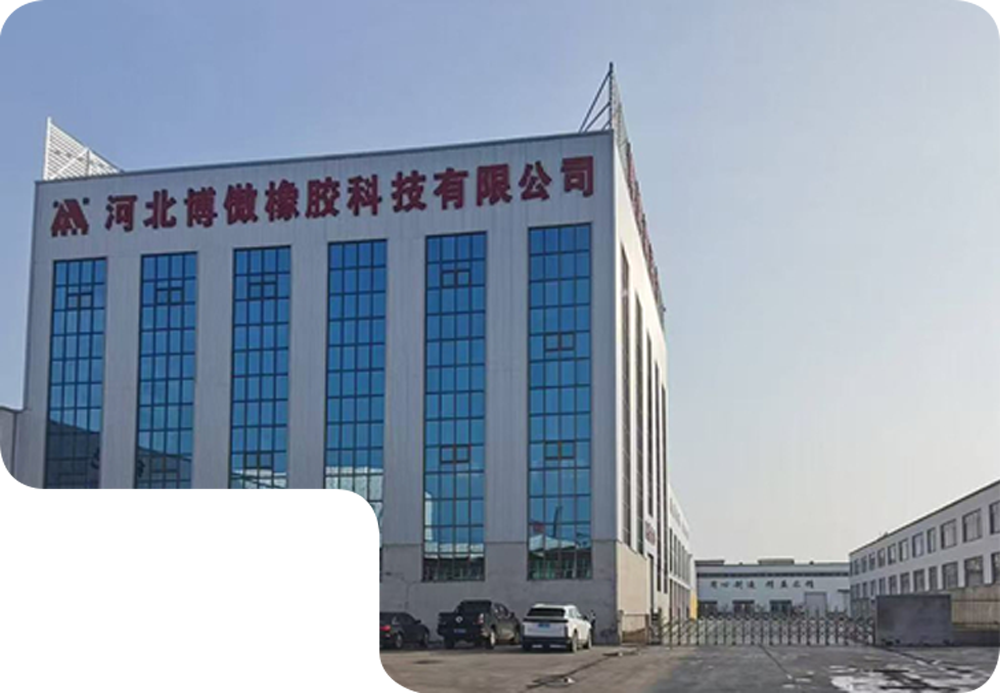
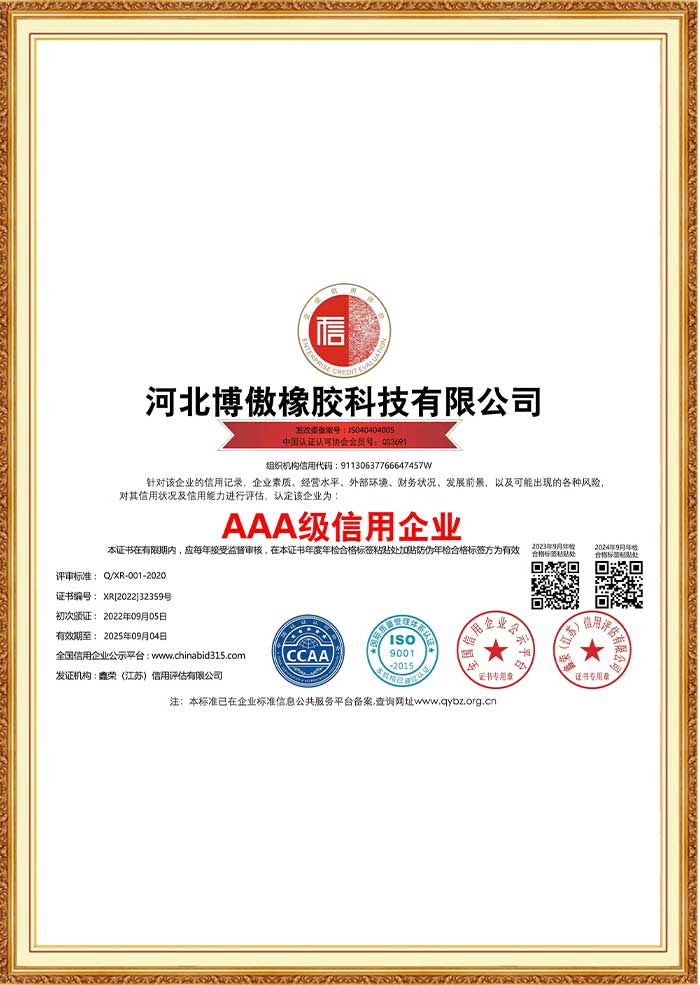
Hebei Boao Rubber Technology Co., Ltd. is located in the Rubber Industrial Park of Boye County, Baoding, Hebei Province. The company was founded in 2004 and covers an area of over 30 acres.
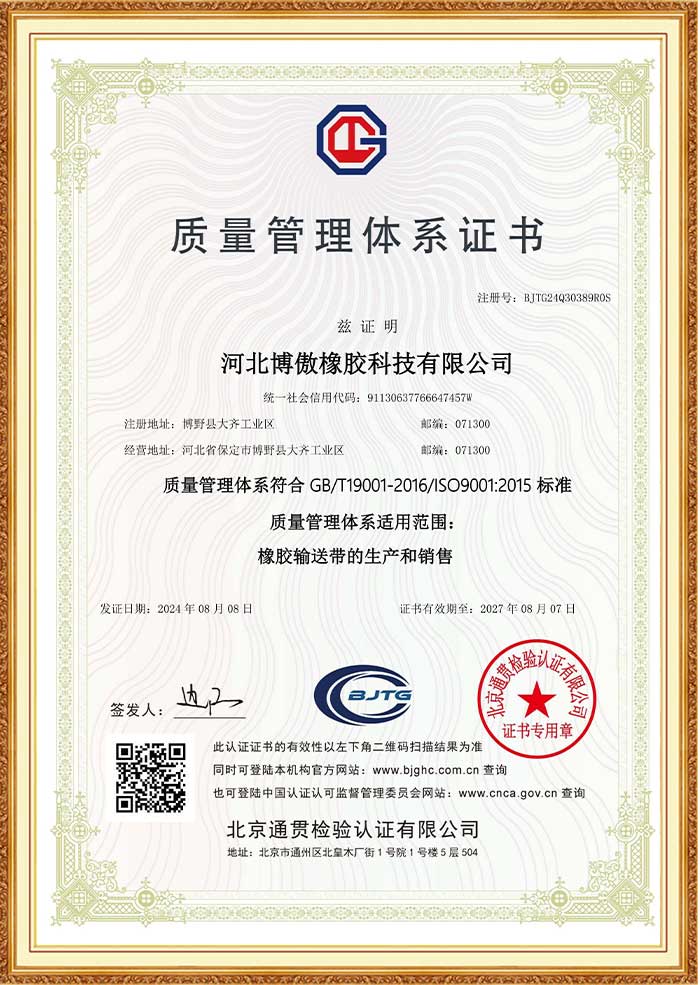
Product brand "Jinao" brand. We are a professional manufacturer in China that integrates product development, research, design, manufacturing, and business services for conveyor belts and conveyor machinery accessories. We have also passed the international quality management system certification in one go. The company has multiple advanced equipment production lines for rolling, forming, vulcanization, and rubber testing (from raw materials to finished products).
Our specialized cold-resistant and flame-retardant conveyor belt solutions are engineered to meet the most demanding requirements of underground mining operations in fire-risk environments, combining cutting-edge material science with decades of manufacturing expertise.






The company has an independent chemical analysis room and physics laboratory, which can ensure timely monitoring of every link from raw material procurement to product delivery. It strictly follows the principle of not entering the site for unqualified products and not leaving the site for products that do not meet standards.
Professional quality inspectors, sophisticated experimental testing equipment, and advanced testing methods ensure the quality of the company's products.
With strong technical strength and a comprehensive after-sales system, our products are exported to various parts of the country. Widely used in industries such as steel, metallurgy, coal, cement, power generation, fertilizers, grain depots, ports, etc.
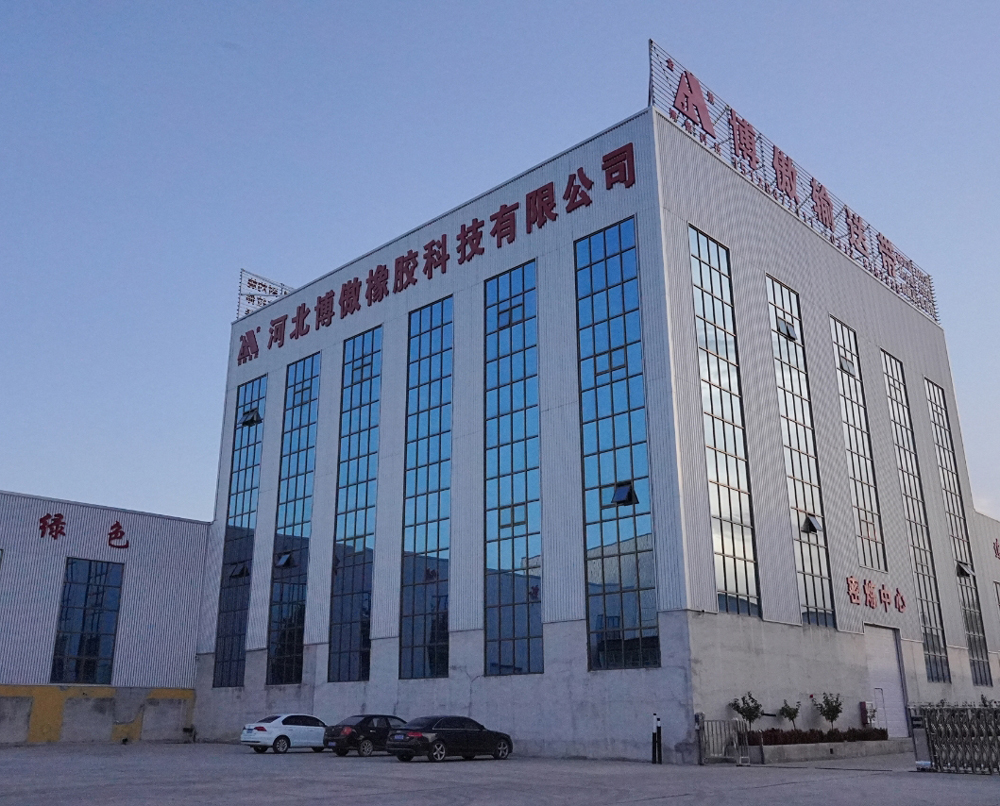
Today, Hebei Boao Rubber Technology Co., Ltd. will be built into a domestic production-oriented enterprise with modern equipment, diversified products, and international market, and will present itself in the new century with a brand new attitude.
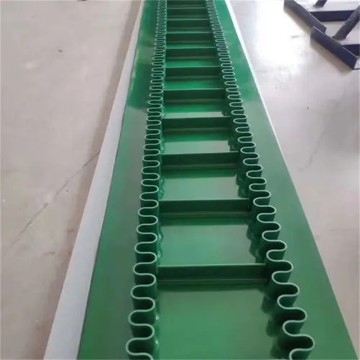
Ordinary conveyor belts (NN, EP, PP), heat-resistant conveyor belts, circular belts, high-temperature resistant conveyor belts, cold resistant conveyor belts, oil and alkali resistant conveyor belts, acid and alkali resistant conveyor belts, rubber waterstop belts, patterned conveyor belts (herringbone, pit), high inclination conveyor belts, wavy edge conveyor belts, and more.
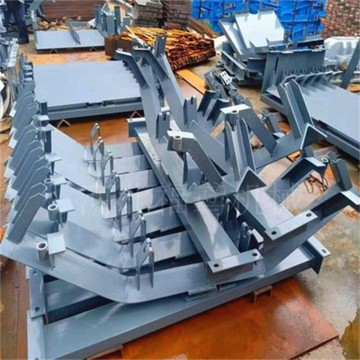
Roller series accessories, ceramic rollers, buffering rollers, roller groups, blocking edges, rollers, and other roller series accessories, electric rollers, rubber coated rollers, transmission rollers, strong magnetic rollers, brackets, and other accessories, groove brackets, centering brackets, tensioning brackets, lifting ears, etc.
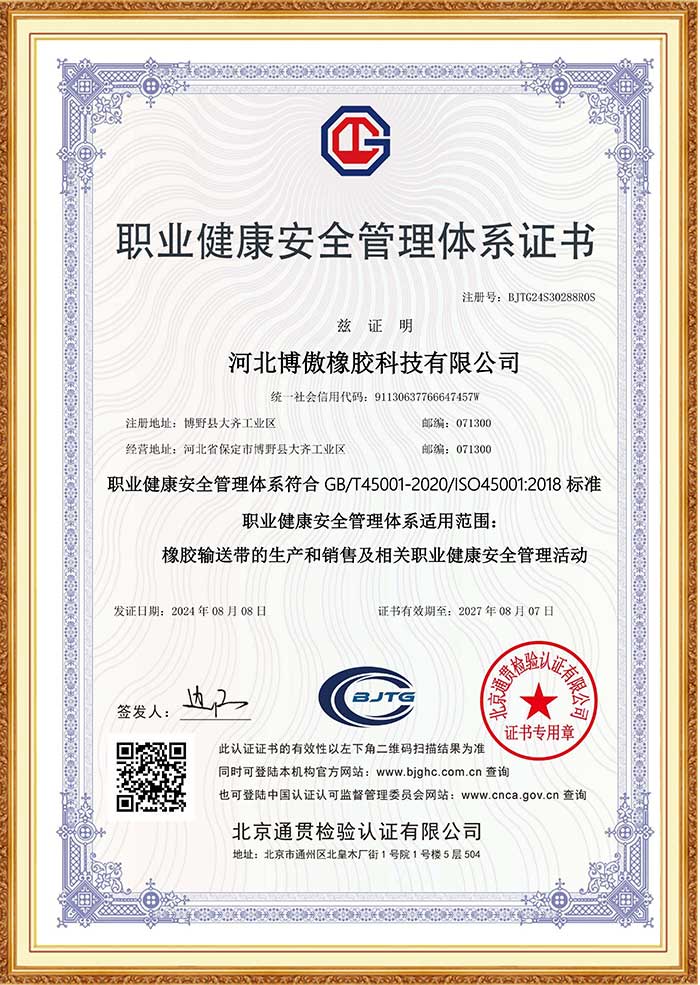

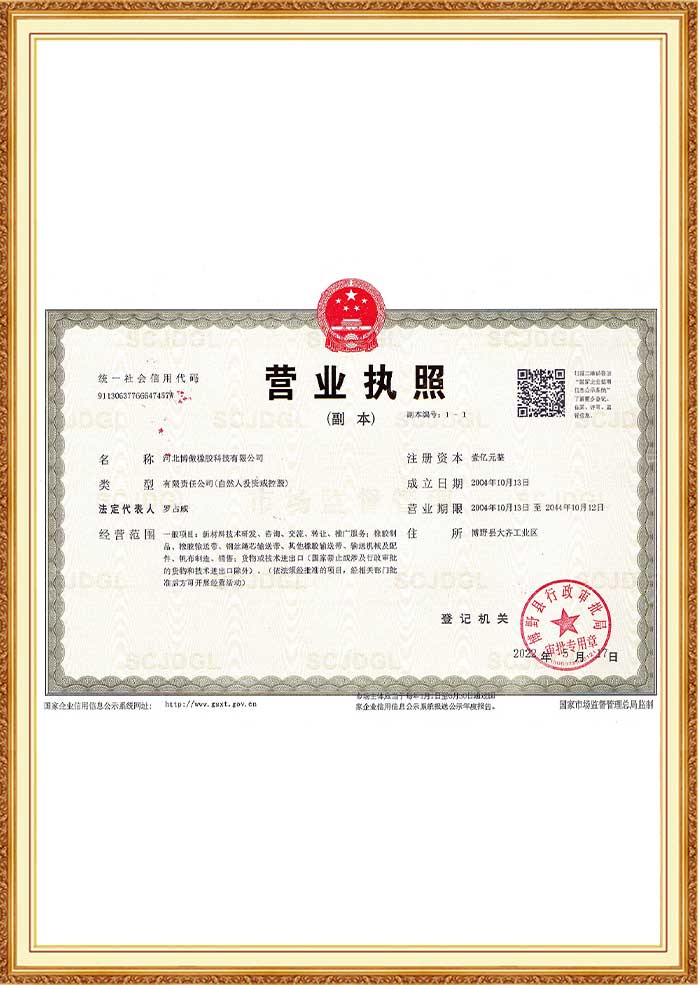
We are committed to providing you with the highest quality products and excellent services. If you have any questions or need assistance with our products, please feel free to contact us and we will be happy to serve you.