


 +86 18920794106


0102030405
China Suppliers Factory General-Purpose Rubber Conveyor Belt for Building Materials, Coal, and Bulk Conveying Solutions
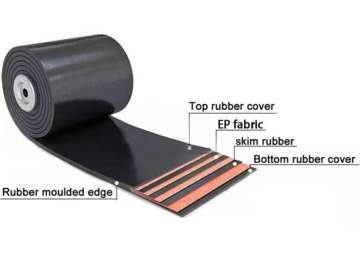
1. Material Refinement: This product is refined from all cotton canvas (CC) or nylon NN polyester EP through processes such as rolling, forming, and vulcanization.
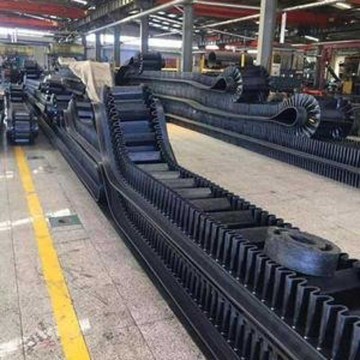
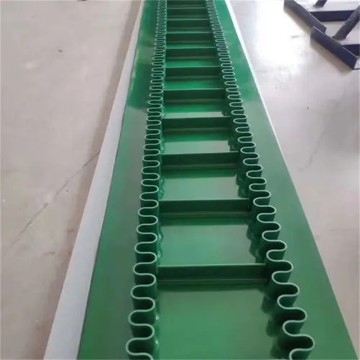
2. Structural Diversity: Suitable for different usage conditions, it can be made into structures such as edge wrapped, open edge, middle ladder, edge ladder, etc.
Specifications
(1) Core Material
Polyester cotton interwoven fabric TC-70 type, all cotton canvas CC-56 type
(2) Bandwidth
300mm - 3000mm
(3) Fabric Layer
1 - 12 layers
(4) Cover Adhesive Thickness
Working surface: 1.5-10mm
Non working surface: 0mm-6mm
Non working surface: 0mm-6mm
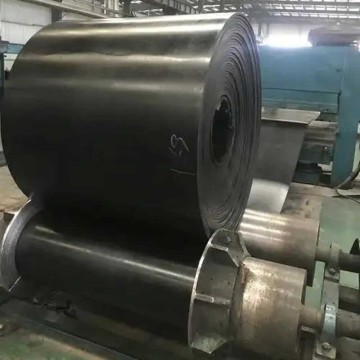
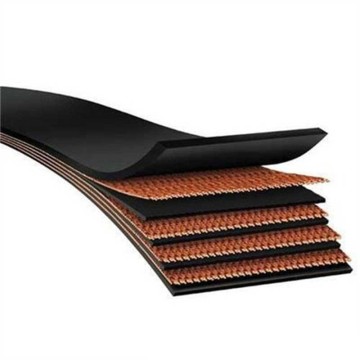
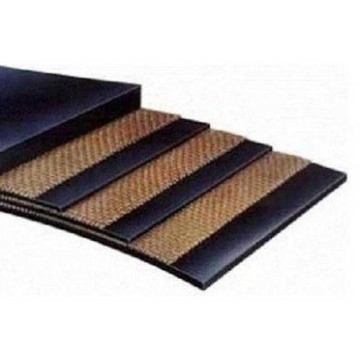
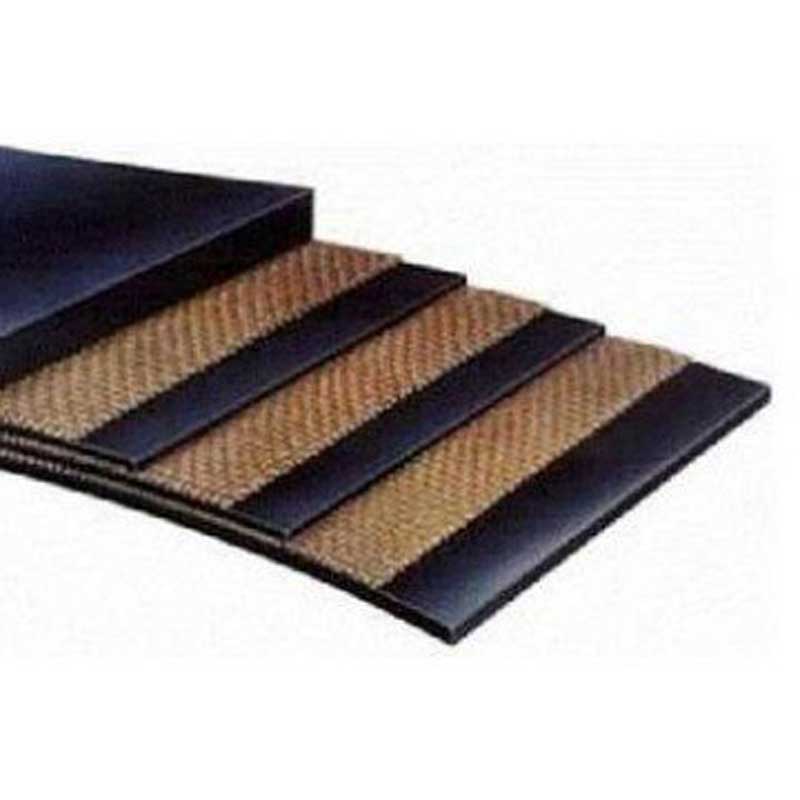
This type of conveyor belt uses fiber fabric as the core and general rubber as the covering material, with a smooth and flat surface (Figure 1). The core is a layered or integral fabric woven from fibers such as cotton, nylon, polyester, or vinylon. Cotton fiber is the earliest used core material and is easy to bond with rubber. Its strength slightly increases when wet, but its breaking strength is low (mostly around 56 N/(mm · layer)), and its anti-corrosion and mildew resistance is poor. Its use is gradually decreasing. Starting from the late 1950s, nylon fiber fabrics were used as core materials and have become the most widely used type. Nylon fiber has a strength of up to 700 N/(mm/layer), is water-resistant, corrosion-resistant, and resistant to bending fatigue; But the elastic elongation is relatively large. Polyester fiber has similar properties to nylon fiber, but its elastic elongation during use is only half that of nylon fiber, making it a promising material for development. Vinylon fiber has a strength of 200 N/(mm · layer), a smaller elastic elongation than nylon fiber, is easy to bond with rubber, and has good heat resistance. However, its strength decreases by 10-25% when wet, and it is only used in a few countries such as China and Japan. When weaving the core, only one type of fiber can be used, or two types of fibers can be blended or interwoven.
Supplementary Information
Ordinary conveyor belts are divided into many specifications and models according to different usage environments and requirements:
- 1. By Size & Width: Divided into commonly used models such as B300 B400 B500 B600 B650 B800 B1000 B1200 B1400 B1600 B1800 B2000 (B represents width, in millimeters).
-
2. By Usage Environment: Divided into models such as heat-resistant, cold-resistant, acid-alkali resistant, oil-resistant, food conveyor belts, etc.
- Ordinary & Food Belts: Upper cover thickness ≥ 3.0mm, lower cover thickness ≥ 1.5mm.
- Special Environment Belts (Heat/Cold/Acid/Oil): Upper cover thickness ≥ 4.5mm, lower cover thickness ≥ 2.0mm.
- Note: Upper and lower covering adhesive thickness can be increased by 1.5mm depending on environmental requirements.
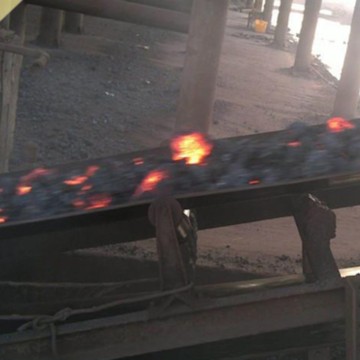
Performance Features: The new material ordinary conveyor belt should also be suitable for high and low temperature resistance: it can operate continuously in the temperature range of -73 ℃ ~ +260 ℃; Better resistance to other chemical substances; Good electrical performance (good insulation, high breakdown resistance); Good delamination (anti-sticking, low friction coefficient, smooth surface); Good dimensional stability (stable and not easily deformed in high temperature and high pressure environments).
Execution Standard: GB/T7984-2001
Covering Layer Standard: Tensile strength ≥ 15Mpa, tensile length at break ≥ 350%, wear amount ≤ 200mm³, average interlayer bonding strength of longitudinal sample ≥ 3.2N/mm between layers, interlayer bonding strength between covering adhesive and layers ≥ 2.1 N/mm.
Covering Layer Standard: Tensile strength ≥ 15Mpa, tensile length at break ≥ 350%, wear amount ≤ 200mm³, average interlayer bonding strength of longitudinal sample ≥ 3.2N/mm between layers, interlayer bonding strength between covering adhesive and layers ≥ 2.1 N/mm.
Classified by Application Purpose:
Oil resistant conveyor belt, anti-skid conveyor belt, climbing conveyor belt, acid and alkali resistant conveyor belt, heat resistant conveyor belt, cold resistant conveyor belt, flame resistant conveyor belt, corrosion-resistant conveyor belt, moisture-proof conveyor belt, low-temperature resistant conveyor belt, high-temperature resistant conveyor belt, flame retardant conveyor belt.
Oil resistant conveyor belt, anti-skid conveyor belt, climbing conveyor belt, acid and alkali resistant conveyor belt, heat resistant conveyor belt, cold resistant conveyor belt, flame resistant conveyor belt, corrosion-resistant conveyor belt, moisture-proof conveyor belt, low-temperature resistant conveyor belt, high-temperature resistant conveyor belt, flame retardant conveyor belt.
Frequently Asked Questions (FAQ)
What raw materials are used in the core of these general conveyor belts?
The core materials include all-cotton canvas (CC), nylon (NN), polyester (EP), polyester-cotton interwoven fabric (TC-70), and vinylon fiber.
What bandwidth sizes and fabric layer options are available?
Bandwidths range from 300mm to 3000mm (including common width models like B300 to B2000), with 1 to 12 fabric layer options available depending on your industrial application.
What are the cover adhesive thickness specifications for different environments?
For ordinary and food conveyor belts, the minimum top cover thickness is 3.0mm, and the bottom is 1.5mm. For special environment belts (heat, cold, acid/alkali, oil resistant), the minimum top cover thickness is 4.5mm, and the bottom is 2.0mm.
What operating temperature range can the new material conveyor belt withstand?
The new material ordinary conveyor belts can operate continuously within an extreme temperature range of -73 ℃ to +260 ℃.
What national execution standard does this conveyor belt meet?
The conveyor belt conforms to the GB/T7984-2001 standard, ensuring a covering layer tensile strength of ≥ 15Mpa and a tensile length at break of ≥ 350%.