Leave Your Message
0%

Picking the right conveyor belt supplier isn’t just about hunting down the lowest price. You really need to think about things like load capacity, operating temperatures, how much wear and tear the belt can handle, splice strength, and delivery timelines. This guide will introduce you to ten manufacturers based in China, all connected with Ep Conveyor Belts and industrial conveying systems. The goal here isn’t to say one company is the best for everything, but rather to help you make a practical comparison.

Now, when it comes to EP belts, they usually use polyester fabric for the warp and nylon for the weft. That combo offers good stability and flexibility, but how well they perform really depends on the specific design and the conditions they’ll be working in. Details, my friend, are everything. A belt handling crushed stones will face totally different challenges than one moving packaged goods indoors. So, when you look into profiles, keep an eye on their product range, customization options, manufacturing experience, quality controls, and after-sales support. And don’t forget—if you can, always double-check technical data sheets, test results, certifications, and references directly with each manufacturer. Having a slick website doesn’t automatically mean they deliver consistent, high-quality performance.

Keep in mind, this list is just a starting point—it's not an in-depth factory audit. Things like a company’s capabilities, export experience, or product specs can change over time. And sometimes, comparing their descriptions of products can be tricky because they might talk about things differently. That’s definitely something you should question. Before you reach out for quotes, get your specs straight—know the belt width, carcass rating, cover grade, operating environment, and how long you expect it to last. When you compare, make sure you’re comparing apples to apples. Doing your homework can really help narrow down your options, but at the end of the day, the final decision should be based on your actual conveyor setup and clear, documented requirements.
China Top 10 EP Conveyor Belt Manufacturers

What EP Conveyor Belts Are and How They Are Constructed

EP conveyor belts use a fabric carcass made from polyester and polyamide. Polyester runs lengthwise, carrying tension with limited stretch. Polyamide crosses the belt, helping it flex around pulleys and absorb impact. Several fabric plies are bonded with rubber skim layers, then covered with protective rubber. Simple construction. Careful bonding matters.

Manufacturers select ply count, cover thickness, and rubber grade for the load and operating conditions. A belt carrying sharp rock needs different impact and abrasion protection from one moving fine, dry material. ISO 14890:2013 sets requirements for rubber- or plastic-covered textile conveyor belts used in general applications. ISO 283 specifies a method for measuring belt tensile strength. These standards help buyers compare construction and test results, but they do not replace checking the actual duty conditions.

For market context, Grand View Research estimated the global conveyor belt market at USD 5.85 billion in 2023, reflecting broad demand across industries. That figure covers more than EP belts alone. When specifying Cc56 Conveyor Belts, confirm the carcass rating, splice method, and pulley diameter against the installation. A drawing alone can mislead. Even a well-built belt may wear early if impact zones or tension are misjudged.

Key Materials and Performance Characteristics of EP Conveyor Belts

EP conveyor belts use polyester yarns in the warp and nylon yarns in the weft. The polyester lengthwise cords provide tensile strength and limit elongation under load. Nylon crosswise yarns add flexibility and help the belt resist impact from falling material. Rubber covers protect the fabric from abrasion, moisture, and contact with conveyed goods. Cover compounds should suit the actual material and operating temperature; one rubber grade cannot serve every application.

Performance depends on more than fabric type. Check belt rating, carcass construction, cover thickness, splice method, and pulley diameter together. A belt may meet its tensile rating yet still wear quickly if sharp rock strikes a thin cover. Look for consistent fabric bonding and even cover thickness. Small details matter. Real operating conditions can differ from a neat specification sheet, so selection deserves a second look.

Tips: Match the cover compound to the conveyed material, then confirm temperature and abrasion requirements with test data. Inspect splice quality and belt tracking during commissioning. Record wear patterns after operation; uneven wear may point to alignment or loading problems, not simply a weak belt.

China Top 10 EP Conveyor Belt Manufacturers - Key Materials and Performance Characteristics of EP Conveyor Belts

Technical reference table covering common EP conveyor belt materials and construction features. The entries describe product characteristics, not a ranked list of manufacturers.

No. Component or Characteristic Common Material or Construction Performance Characteristics Selection Considerations
1 EP fabric carcass Polyester yarns in the warp direction and polyamide (nylon) yarns in the weft direction. Provides tensile reinforcement. Polyester contributes low elongation in the belt-length direction, while the weft yarns provide transverse flexibility and impact support. Check the required belt strength, operating tension, pulley diameters, and loading conditions.
2 Warp-direction reinforcement Longitudinal polyester yarns within the fabric plies. Helps limit belt stretch under load and supports dimensional stability during operation. Actual elongation depends on the belt construction, splice, tension, and operating conditions; consult the product specification.
3 Weft-direction reinforcement Transverse polyamide yarns within the EP fabric. Contributes to transverse strength and helps the carcass flex around pulleys and troughing idlers. Consider belt width, troughing requirements, loading impact, and the conveyor’s support arrangement.
4 Cover rubber Rubber compounds commonly based on natural rubber, styrene-butadiene rubber, or blends. Protects the carcass from abrasion, impact, moisture, and contact with conveyed material. Properties vary by compound. Choose the cover grade according to the conveyed material, operating temperature, and required resistance properties.
5 Top cover Rubber cover on the material-carrying side; it may be thicker than the bottom cover. Acts as the primary wear and impact protection layer where material contacts the belt. Cover thickness should reflect material abrasiveness, lump size, loading height, and expected service conditions.
6 Bottom cover Rubber cover on the pulley and idler side of the belt. Protects the carcass from wear caused by pulleys and idlers while allowing the belt to run over the conveyor system. Consider pulley condition, idler alignment, belt tracking, and the level of underside wear expected.
7 Inter-ply adhesion Rubber skim compounds between fabric plies and between the carcass and covers. Helps bond the layers together and resist separation during flexing and service. Adhesion performance is product-specific; use the applicable technical data and relevant test requirements.
8 Abrasion resistance Selected cover compounds formulated for wear resistance. Helps reduce material loss when the belt carries abrasive loads. Performance depends on the rubber formulation and test method. Compare test results using the same standard and method; abrasive material, belt speed, and loading also affect wear.
9 Heat and oil resistance Special-purpose cover compounds selected for elevated temperatures or oily materials. Can improve suitability for particular service environments, but heat and oil resistance are separate compound properties. Specify the material type, temperature range, and exposure conditions. Do not assume a general-purpose cover has these properties.
10 Overall belt performance Combined carcass, skim rubber, covers, belt thickness, and splice construction. Load capacity, flexibility, wear life, and service behavior result from the complete belt design rather than one material alone. Verify the required tensile rating, cover grade, dimensions, splice method, and applicable standards for the conveyor duty.

Note: EP denotes a polyester/nylon fabric carcass. Exact properties and ratings vary by product design and test method; confirm application suitability with the relevant technical datasheet.

How EP Conveyor Belts Are Manufactured and Tested in China

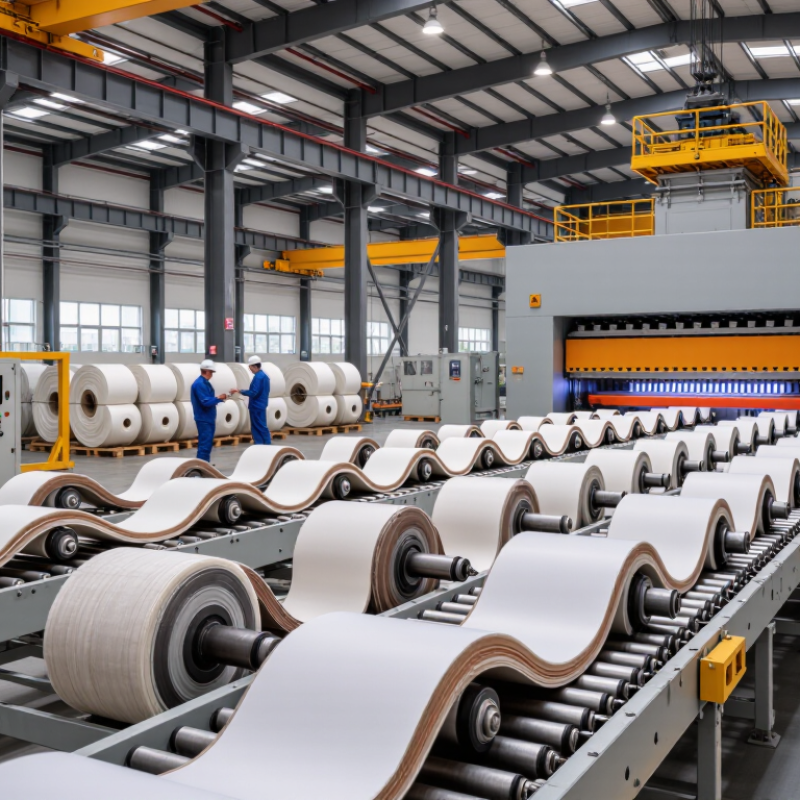
China’s EP conveyor belt production typically starts with polyester warp and polyamide weft fabric. The textile is checked for weave defects, then coated with rubber through calendering. Each layer is aligned carefully. Small shifts can create uneven edges later. Rubber covers are added before the belt enters a heated press for vulcanization, which bonds the layers and sets the final thickness.

Quality checks vary by factory and belt specification. Technicians may measure thickness, width, and cover condition, then test tensile strength and adhesion between layers. Some facilities also run a short sample under load to observe tracking and surface wear. A clean-looking belt is not proof of consistent performance. Records linking test results to production batches are useful, though documentation can still miss handling damage after inspection. EP construction differs from all-nylon Nylon Conveyor Belts, so buyers should compare the stated fabric and test requirements.

Tips: Ask for the fabric construction, cover grade, and test data for the exact belt order. Check sample edges and splice preparation. A rushed inspection can miss uneven bonding.

Profiles of China’s Top 10 EP Conveyor Belt Manufacturers

China’s EP conveyor belt sector includes manufacturers with different strengths, from broad product ranges to focused engineering teams. These ten profiles compare practical capabilities rather than treating every factory as interchangeable. Some suppliers emphasize polyester-nylon carcass construction for steady operation under moderate loads. Others offer belts designed for longer routes, abrasive materials, or demanding transfer points. Details matter.

A useful profile examines fabric specifications, belt width, cover thickness, and jointing support. Buyers should also ask how tensile strength and adhesion are checked, and whether test records match the quoted product. Rubber Conveyor Belts can look similar in a catalogue, yet small differences in cover formulation affect wear and service life. Ask about it.

Production scale alone does not prove consistent quality. Look for clear technical documentation, traceable inspection procedures, and responsive engineering support. Export experience may help with packaging and communication, but it should not replace product verification. A neat ranking can hide real differences: public information is uneven, and some capabilities need direct confirmation. Compare samples, operating conditions, and maintenance feedback before judging which manufacturer fits a project.

How to Compare Chinese EP Conveyor Belt Manufacturers

Comparing Chinese EP conveyor belt manufacturers takes more than checking belt strength and price. EP fabric uses polyester warp and nylon weft, but construction details vary. Ask for the fabric-ply count, cover thickness, belt width, and stated tensile rating. Then check whether test reports match the exact specification you plan to buy. Details matter.

Look closely at how each supplier controls production. Request information on adhesion testing, splice guidance, edge finish, and inspection frequency. A sample can reveal uneven rubber surfaces or rough cut edges, though it cannot prove long-term performance. Ask how rolls are wrapped and stored before shipment; moisture and poor handling can complicate installation. Clear answers are useful. Vague promises are not.

Compare suppliers against your operating conditions, not just a catalog table. Share the material load, operating temperature, pulley diameter, and expected running hours. For Lifting Conveyor Belts, confirm the required safety factor and whether the belt suits the actual lifting arrangement. Check lead times, replacement-ply availability, and warranty terms in writing. A low quote may omit important details. I would still treat a polished report cautiously until its test method and sample identification are clear. That extra check takes time, but skipping it can make a small price difference look more important than it is.

Applications and Selection Factors for EP Conveyor Belts

EP conveyor belts use polyester in the warp and nylon in the weft, combining low stretch with flexibility. They suit mines, quarries, ports, cement works, and steel plants, where bulk materials travel over long runs or through transfer points. The scale is substantial: World Steel Association’s World Steel in Figures 2025 reports 1,882.6 million tonnes of crude steel production in 2024. USGS Mineral Commodity Summaries 2025 estimates 2024 global copper mine production at 23 million tonnes. These figures point to demanding material flows, not a single belt specification.

Selection should start with the actual duty: load, belt speed, incline, lump size, and operating hours. Then check tensile rating, cover thickness, abrasion resistance, and resistance to heat, moisture, or oil. At a transfer point, a belt may face sharp rock and repeated impact; at a port, salt and wet fines may dominate. That matters. Confirm pulley diameter, trough angle, splice method, and take-up travel against the conveyor design. ISO 14890 provides requirements for textile carcass conveyor belts, but compliance alone cannot predict service life in a specific plant. A tidy datasheet can still miss a messy loading zone. Field observations and maintenance records help refine the choice, though they are often incomplete.

Representative EP Conveyor Belt Strength Classes

EP belt class indicates the carcass’s nominal tensile strength in N/mm; for example, EP 400/3 denotes a 400 N/mm belt with three plies. These are representative strength classes, not application-specific recommendations. Select a belt based on calculated belt tension, conveying distance, material load, incline, impact, and operating conditions.

Choosing Acid and Alkali Resistant Conveyor Belts in China: A Guide to High-Performance Factory Solutions

Choosing an acid- and alkali-resistant conveyor belt in China starts with matching its construction to the materials and conditions on site. Phosphate fertilizer production, chemical processing, and areas exposed to high-salinity seawater can quickly wear down ordinary belt materials. For these applications, a durable rubber-and-plastic blend reinforced with inert materials helps resist corrosive exposure and offers an alternative to traditional chloroprene rubber options.

Factory construction also matters. Our belts are manufactured in China with high-quality EP canvas as the reinforcing skeleton, providing dependable strength and durability in demanding operations. Compared with cotton-canvas core belts, EP canvas offers a more reliable foundation for handling corrosive materials and supporting consistent service under regular industrial use. Selecting the right belt involves considering the chemical exposure, operating conditions, and required load capacity, so suppliers can recommend a suitable configuration for each production line.

FAQS

What materials are used in EP conveyor belts?

Polyester yarns run lengthwise, while nylon yarns cross the belt. Rubber covers protect the fabric.

How do the polyester and nylon layers perform?

Polyester cords provide tensile strength and limit stretching. Nylon crosswise yarns add flexibility and help absorb impacts from falling material.

What should I consider when choosing a belt cover?

Match the rubber compound to the conveyed material, operating temperature, and abrasion level. One grade does not suit every job.

Why can a belt wear out despite meeting its tensile rating?

A thin cover may wear quickly when sharp rocks strike it. Check cover thickness and actual loading conditions.

How are EP conveyor belts manufactured?

Fabric is checked, coated with rubber through calendering, and layered carefully. Heat and pressure then bond the belt during vulcanization.

What tests may be performed on EP belts?

Checks can include thickness, width, cover condition, tensile strength, and layer adhesion. Some facilities also run samples under load.

What details should I request for a specific belt order?

Ask for fabric construction, cover grade, and test data tied to that order. Batch records help, but they are not perfect.

What should I inspect during installation and operation?

Check splice preparation, belt tracking, and sample edges. Record wear patterns after operation; uneven wear may point to alignment or loading problems. One clue, not the whole story.

Conclusion

This article explains what EP conveyor belts are, how their polyester and nylon reinforcement layers are arranged, and how these materials contribute to strength, flexibility, and resistance to wear. It also outlines the key performance characteristics buyers may consider, including tensile strength, elongation, adhesion, and suitability for different operating conditions. Readers will learn how EP conveyor belts are commonly manufactured and tested in China, from fabric preparation and rubber processing to quality checks on finished products.

The article also introduces the landscape of China’s leading EP conveyor belt manufacturers without focusing on brand promotion, and offers practical criteria for comparing suppliers, such as production capability, product consistency, technical support, and customization options. Finally, it reviews common applications and selection factors, helping readers match Ep Conveyor Belts to material type, conveying distance, load, environment, and operating requirements.
Sophie

Sophie

Sophie is a dedicated marketing professional at Hebei Boao Rubber Technology Co., Ltd., a leading manufacturer in China's conveyor belt and machinery accessories industry. With an extensive background in product development and design, Sophie possesses a profound understanding of the company's......
Previous 10 Best Nylon Conveyor Belts for Industrial Applications