Leave Your Message
0%

Choosing the right light-duty conveyor belts made from polyurethane can really make or break how smoothly your production line runs. Things like belt width, material, load capacity, speed, temperature, and cleanliness— they all matter. What might look perfect in a catalog could perform terribly when faced with sharp edges, greasy products, or frequent washdowns. Those small details? They make all the difference.

Michael R. Hayes, who’s an expert in conveyor applications, puts it best: “The best belt isn’t necessarily the strongest. It’s the one that fits your process without creating new headaches.” That practical approach really underpins the seven tips in this guide. We’ll look at factors like polyurethane quality, surface design, belt tracking, splice methods, pulley compatibility, sanitation needs, and support from suppliers. These points help buyers compare light-duty conveyor belts more confidently. Plus, they encourage taking a closer look at actual working conditions—for example, a 400-millimeter-wide belt moving packaged food through a humid processing room.

Experience still plays a big role here. A belt can be technically perfect but fail if you ignore proper installation tension. Maintenance crews might pick an easy-to-clean surface without considering whether it’s chemically compatible. That’s an easy mistake to make. Price can also be tricky—sometimes a cheaper belt ends up costing more in adjustments, replacements, and downtime over time. But hey, every conveyor setup is different, with unique loads and work habits. So, it’s super important to double-check measurements before placing an order. When done carefully, polyurethane light-duty conveyor belts can deliver steady performance, keep hygiene standards high, and last longer in service.
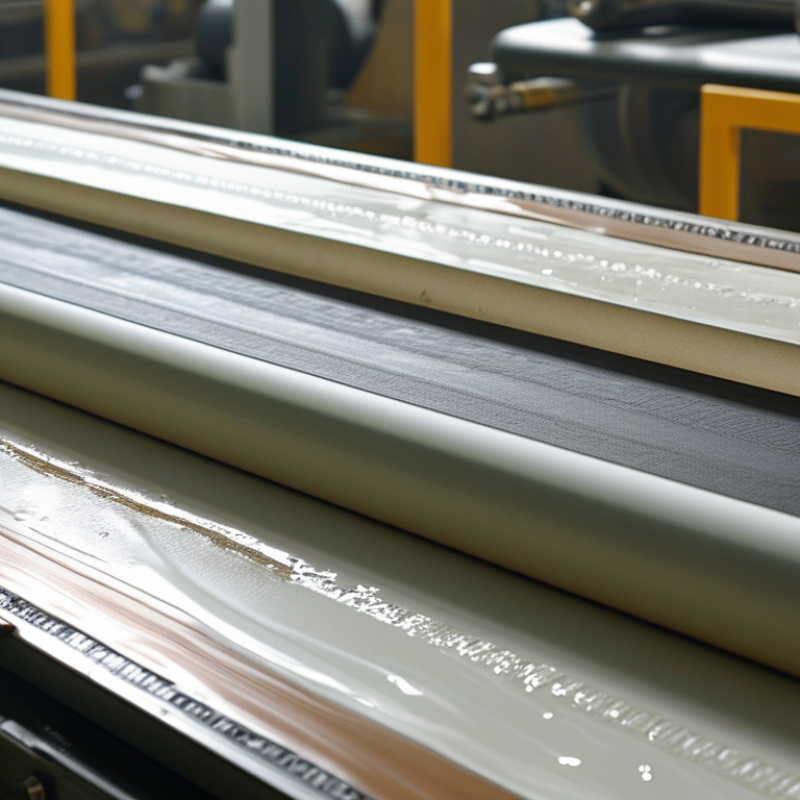
7 Tips for Choosing PU Light Duty Conveyor Belts?

Define PU Light Duty Conveyor Belts and Their Main Applications

PU light duty conveyor belts are flexible conveying surfaces made from polyurethane, often reinforced with polyester fabric. They are designed for moderate loads, short or medium conveying distances, and controlled operating speeds. Compared with heavier belts, they usually require less drive power and can run over smaller pulleys. Their surfaces may be smooth, textured, or cleated.

These belts commonly serve food handling, packaging, electronics assembly, textile production, and pharmaceutical packaging. A smooth belt can move cartons, trays, and sealed packages with steady contact. A textured surface offers better grip for angled conveying. Cleats help separate products, but they may collect residue. That detail is easy to overlook.

Choosing the belt requires more than checking width and length. Consider product weight, belt tension, pulley diameter, temperature, moisture, and cleaning chemicals. PU often supports hygienic designs, but the exact belt construction still matters. Where regulated products are processed, confirm suitable materials and cleaning practices with qualified personnel. A belt that works well in a dry packaging line may perform poorly near oil, heat, or sharp edges. I have found that operating conditions are often described too simply. Even light duty work can create high stress when products start and stop repeatedly. Inspect tracking, joints, and surface wear during real production, not only during installation.

Assess Material Properties for Your Conveying Conditions

When selecting Light-Duty Conveyor Belts, start with the material, not the catalog photograph. Polyurethane often suits clean conveying and moderate loads. Its smooth surface can reduce residue around packaged goods. However, surface feel alone proves little. Check hardness, tensile strength, elongation, and abrasion resistance against the actual product. A soft belt may protect delicate items. It may also stretch under repeated acceleration. That trade-off is easy to miss.

Map the operating conditions in detail. Record product temperature, belt speed, incline angle, and daily running hours. Warm oil, moisture, and cleaning chemicals can change polyurethane performance. Ask whether the belt needs resistance to hydrolysis or animal fats. For sharp edges, inspect cut resistance rather than relying on thickness. A 2 mm belt is not automatically weaker. Construction matters. Confirm the permitted temperature range from technical data, then test a sample under real tension. Small trials reveal tracking problems quickly.

I once selected a belt mainly because it ran quietly. It later slipped when condensation formed on the drive pulley. That choice was convenient, but incomplete. Friction depends on the belt cover, pulley material, moisture, and tension. Review these details with maintenance technicians who understand the line. They can identify cleaning routines, misalignment, and frequent starts. Keep written test results and replacement intervals. Do not assume yesterday’s setting fits a new product. Materials behave differently in practice.

Choose the Correct Belt Width, Length, and Load Capacity

Choosing a PU light duty conveyor belt starts with accurate sizing, not visual judgment. Belt width should exceed the product width and allow space for misalignment. Measure the widest package, including labels, flaps, and unstable edges. Then add a practical clearance margin. A tight fit looks efficient. It often is not.

Belt length requires more than measuring the conveyor frame. Record the center distance, pulley diameters, take-up travel, and joining method. CEMA’s Belt Conveyors for Bulk Materials, 7th Edition, identifies belt geometry, pulley arrangement, and tension as key design factors. For short PU conveyors, even a small length error can cause tracking problems. Measure twice.

Load capacity also needs careful interpretation. The rated belt tension is not the same as the allowable product load. CEMA guidance considers belt width, speed, loading pattern, and support conditions. ISO 21183-1 guidance also highlights belt construction and dimensional performance for light conveyor applications. A 10 kg carton may be acceptable when distributed evenly, but risky when placed between widely spaced supports. Check the heaviest item, impact during loading, and continuous accumulation. A spreadsheet can help, but field testing still matters. My own selection mistakes usually came from trusting average load data instead of peak load conditions.

Compare Surface Patterns, Profiles, and Belt Grip

When selecting Pu Light-Duty Conveyor Belts, begin with the product’s contact surface. Smooth covers suit sealed cartons, plastic trays, and dry parts. They clean quickly. Yet smooth belts can slide under oil, dust, or a steep incline. A fine matte pattern adds friction without leaving deep marks on soft packaging. Test a real sample, not only a catalog image. Lighting can make grooves look more aggressive than they are.

Profiles change how reliably a belt carries goods. A shallow longitudinal rib guides small parcels while preserving easy cleaning. Raised diamond or chevron patterns improve traction on inclined conveyors, especially with loose bags. However, tall profiles may trap crumbs and complicate sanitation. Measure profile height against your smallest product. A gap that seems harmless can catch a thin pouch corner. That failure is easy to overlook.

Grip depends on more than pattern. Belt hardness, tension, pulley diameter, speed, and moisture all matter. In a workshop test, run the heaviest item at the planned speed and incline. Watch for creeping, edge wandering, and scuffing after repeated cycles. Do not over-tighten the belt to solve poor grip; it can stress bearings and shorten service life. I have found that a moderate profile often performs better than a dramatic one. Still, every application deserves verification. Conditions change.

Check Temperature, Chemical, and Moisture Resistance

7 Tips for Choosing PU Light Duty Conveyor Belts

Temperature should match the belt’s real working environment, not only the room temperature. Check the continuous operating range and short heat peaks near ovens or sealing units.

Tip 1: Include both product temperature and ambient heat.

Tip 2: Watch sudden temperature changes.

PU may harden, soften, or lose flexibility when conditions fluctuate. I once saw a belt perform well during testing, then crack after repeated hot-water cleaning. The test had missed thermal cycling.

Chemical exposure deserves equal attention.

Tip 3: List every contact substance, including oils, detergents, acids, and sugary residues.

Tip 4: Check chemical concentration and contact time, not just the chemical name.

A mild cleaner can become aggressive when used hot or at high concentration. Use the supplier’s compatibility data and request evidence from controlled testing. Do not trust appearance alone.

Moisture resistance is more than preventing water absorption.

Tip 5 Confirm performance during continuous wet operation.

Tip 6 Examine the belt’s surface texture, edges, and splice area, where water can remain trapped.

Tip 7 Test the belt with your actual cleaning routine before installation.

Include spray pressure, drying time, and sanitizer exposure. A small sample can reveal swelling, surface tackiness, or poor tracking. My own testing has sometimes been too short, especially when evaluating overnight moisture. That weakness should be recorded and corrected before approving a belt for production.

Evaluate Belt Hygiene, Maintenance, and Service Life

Choosing a PU light duty conveyor belt requires more than checking width, speed, and load capacity. Hygiene often decides whether the belt performs reliably in daily production. Select a smooth, non-porous surface that resists oil, moisture, and food residue. Rounded edges reduce areas where dirt can collect. For food handling, confirm the belt’s compliance with applicable safety and hygiene requirements. Do not assume a clean appearance proves sanitation.

Maintenance should be simple enough for busy operators to follow. Inspect the belt weekly for cuts, edge fraying, surface cracks, and unusual tracking marks. A small crack near a splice can expand quickly under repeated tension. Clean with approved detergents, controlled water pressure, and soft brushes. Harsh chemicals may weaken the belt surface, even when the damage is not immediately visible. Record cleaning times and inspection findings. Records reveal patterns that memory misses.

Service life depends on installation quality as much as belt material. Align pulleys carefully and remove sharp contact points from the conveyor frame. Incorrect tension creates stretching, slipping, and premature wear. PU belts usually offer strong abrasion resistance, while Pvc Light-Duty Conveyor Belts may suit applications needing flexible handling and economical replacement. The better choice depends on temperature, product surface, cleaning frequency, and operating hours. In practice, we have seen belts replaced too early because tracking was ignored. That mistake is easy to repeat. Test the belt under real production conditions before final approval.

Select a Reliable Manufacturer and Confirm Technical Support

Choosing a Light Duty Conveyor belt is not only a matter of width, color, or price. The manufacturer’s technical support can determine whether the belt performs reliably after installation. Ask for clear data on belt construction, tensile strength, pulley diameter, temperature range, and approved joining methods. Vague answers are warning signs.

I once inspected a belt that looked suitable in a catalog but slipped under a modest load. The supplier had not asked about incline, cleaning chemicals, or pulley size. That mistake caused unnecessary adjustment work. A dependable manufacturer should review these details before recommending a product. They should also provide drawings, installation instructions, tracking guidance, and maintenance recommendations written for your actual equipment.

Response time matters. Ask who will support commissioning and what happens when the belt wanders, stretches, or develops edge damage. Practical support may include video assistance, sample testing, replacement guidance, and access to an experienced technician. Request test records and quality documents, not just attractive claims. Check whether the manufacturer can maintain consistent dimensions across repeat orders. Small variations can affect tracking.

Technical support is rarely perfect. Even experienced teams can overlook a site condition. Share photos, conveyor speed, load weight, operating hours, and cleaning procedures to reduce assumptions. A reliable manufacturer welcomes difficult questions and records the final specification. That paper trail protects both performance and future purchasing decisions.

7 Tips for Choosing PU Light Duty Conveyor Belts? - Select a Reliable Manufacturer and Confirm Technical Support

No. Selection Tip Key Dimension Practical Criteria Recommended Verification Technical Support to Confirm
1 Match the Belt to the Conveyed Product Surface and material compatibility Choose a PU belt when cleanability, low noise, oil resistance, or direct food-contact suitability is important. Select a smooth, matte, rough-top, or profiled surface according to product grip requirements. Provide the manufacturer with product type, temperature, moisture, oil exposure, load condition, and cleaning chemicals. Request material data, food-contact documentation where applicable, chemical-resistance guidance, and a sample test with the actual product.
2 Calculate the Required Belt Width and Load Width, payload, and load distribution The belt should safely carry the total product weight without excessive sag, edge deformation, or tracking problems. Allow clearance between the product and conveyor frame. Record product dimensions, maximum weight per meter, loading pattern, belt width, support spacing, and conveyor length. Ask for allowable tension, maximum recommended load, minimum pulley diameter, and a calculation based on the complete conveyor layout.
3 Select the Correct Belt Thickness and Construction Thickness, tensile layer, and flexibility Light-duty PU belts commonly use a relatively thin construction for flexible conveying and small pulley applications. Heavier or longer conveyors may require stronger reinforcement and greater thickness. Compare belt thickness, carcass type, splice method, elongation, and resistance to repeated flexing. Confirm whether the belt is suitable for knife-edge transfer, small pulleys, inclined conveying, and continuous start-stop operation.
4 Check Temperature and Chemical Resistance Operating and cleaning conditions Confirm both continuous operating temperature and short-term peak temperature. Cleaning agents, oils, grease, acids, and alkaline solutions may affect belt life differently. List normal temperature, peak temperature, exposure duration, detergent concentration, and cleaning frequency. Request a resistance chart, recommended temperature range, cleaning instructions, and written limitations for the intended chemicals.
5 Evaluate Tracking, Pulley, and Splice Requirements Pulley diameter, tracking method, and joint quality The belt must suit the conveyor’s drive pulley, tail pulley, idlers, crowned or cylindrical pulleys, and available tracking system. A poor splice can cause vibration and premature failure. Provide pulley diameters, center distance, belt speed, conveyor inclination, and available adjustment range. Confirm endless joining options, finger splice or thermoweld procedures, splice tools, alignment instructions, and commissioning support.
6 Review Hygiene, Safety, and Compliance Needs Application standards and documentation For food, pharmaceutical, or sensitive applications, consider cleanability, surface finish, color requirements, traceability, and restrictions on materials or lubricants. Define the industry, contact status, cleaning process, inspection requirements, and required compliance documents before ordering. Ask for declarations of conformity, material specifications, test reports, lot traceability, installation instructions, and maintenance recommendations.
7 Choose a Reliable Manufacturer with Strong Technical Support Quality consistency, service, and lifecycle value Compare quality control, production capability, lead time, customization, replacement availability, warranty terms, and total operating cost rather than price alone. Request samples, technical drawings, inspection records, references from similar applications, and a clear quotation with specifications. Confirm response time, belt selection calculations, installation training, troubleshooting procedures, spare-part planning, warranty coverage, and after-sales contact channels.
Purchasing Checklist: Before placing an order, confirm belt width, length, thickness, surface pattern, color, splice type, operating speed, load, pulley diameters, temperature range, chemical exposure, compliance documents, delivery time, and installation support.

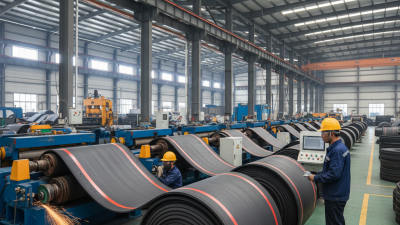
How to Choose a Reliable Steel Wire Rope Core Conveyor Belt Supplier for Efficient Material Transport

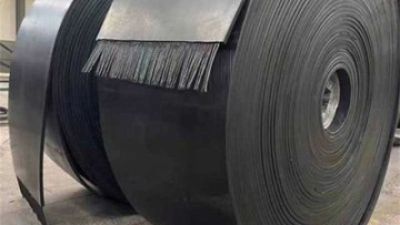
Selecting a reliable steel wire rope core conveyor belt supplier is essential for efficient and stable material transport. Begin by evaluating the manufacturer’s production capabilities, quality control procedures, and experience in heavy-duty industries. A dependable supplier should provide belts with a strong rubber exterior and reinforced steel wire core, ensuring high tensile strength, excellent impact resistance, minimal elongation, and long service life. The supplier should also offer technical support to match belt specifications with conveying distance, loading conditions, speed, and environmental requirements.

For long-distance and high-speed transportation, quality steel cord conveyor belts should provide good troughability, flexibility, and reliable traction. They are suitable for coal, mining, ports, metallurgy, power generation, chemical processing, and other demanding applications. A professional factory can customize belt performance according to the working environment, including ordinary, flame-retardant, heat-resistant, wear-resistant, cold-resistant, acid- and alkali-resistant, and oil-resistant varieties. It is also important to confirm product consistency, delivery capacity, maintenance guidance, and after-sales service before placing an order. Choosing a China-based manufacturer with advanced production facilities and tailored engineering support can help ensure durable, efficient, and cost-effective conveying performance.

FAQS

: What should I check before selecting a light-duty conveyor belt?

: Check hardness, tensile strength, elongation, abrasion resistance, temperature, speed, incline, and daily running hours. A soft belt may protect fragile items. It may stretch during repeated acceleration.

Is a smooth belt surface always the best choice?

No. Smooth surfaces clean easily but may slip with oil, dust, moisture, or steep inclines. A fine matte texture can add grip without marking soft packages. Test real products.

How do profiles affect conveying performance?

Shallow ribs can guide small parcels while keeping cleaning simple. Diamond or chevron profiles improve traction on inclines. Tall profiles may trap crumbs or catch thin pouch corners.

How can I test belt grip accurately?

Run the heaviest product at the planned speed and incline. Watch for creeping, edge wandering, and scuffing after repeated cycles. Do not over-tighten the belt. That can damage bearings.

What temperature conditions require special attention?

Record product temperature, ambient heat, short heat peaks, and sudden temperature changes. Hot-water cleaning may cause cracking after repeated thermal cycles. A short test can mislead.

Which chemicals should be included in the compatibility check?

List oils, detergents, acids, sugary residues, sanitizers, and other contact substances. Check concentration and contact time, not only chemical names. Hot, concentrated cleaners may be unexpectedly aggressive.

How should moisture resistance be evaluated?

Test continuous wet operation, spray pressure, drying time, and sanitizer exposure. Inspect the surface, edges, and splice area for trapped water. Look for swelling, tackiness, and poor tracking.

What maintenance details can influence belt selection?

Review cleaning routines, pulley material, tension, alignment, frequent starts, and condensation around the drive pulley. Keep written test results and replacement intervals. Yesterday’s settings may fail today. That deserves review.

Conclusion

Choosing Pu Light-Duty Conveyor Belts begins with understanding their purpose. These belts are designed for the efficient transport of light to medium-weight goods in applications such as food processing, packaging, electronics, logistics, and general manufacturing. Start by assessing the materials being conveyed, operating speed, incline, and working environment. Select a belt with suitable width, length, thickness, and load capacity to ensure stable operation and prevent premature wear.

Surface patterns and profiles should match the required grip and product-handling needs, especially when conveying goods on an incline. It is also important to check resistance to temperature changes, moisture, oils, cleaning agents, and other chemicals present in the workplace. For hygiene-sensitive applications, choose a belt that is easy to clean and maintain. Finally, consider expected service life, replacement convenience, technical documentation, and the manufacturer’s support capabilities. A reliable supplier should provide accurate specifications, installation guidance, and responsive after-sales assistance.
Oliver

Oliver

Oliver is a dedicated marketing professional at a leading manufacturer in China, specializing in conveyor belts and conveyor machinery accessories. With a deep understanding of the industry, he plays a critical role in product development, research, design, and business services. His expertise......
Previous What is Raised Herringbone Conveyor Belts Benefits and Uses?