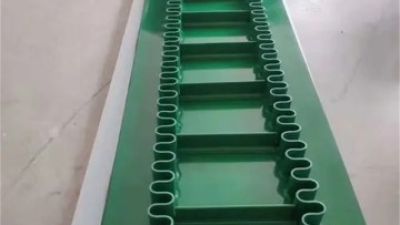
Picking out Concave Herringbone Conveyor Belts isn’t just about finding a pattern that matches your product. In real-world settings, how well the belt works really depends on loads, pulley setups, the incline, moisture levels, and how often you clean it. Something that looks perfect in the catalog might not track at all when the material shifts towards the edges—something operators tend to notice only after dust, spills, or uneven wear start cropping up. That small disconnect between specs and actual use really matters. That's why this guide shares seven practical tips—things like how to evaluate belt shape, rubber quality, strength, grip, and what kind of support to look for. It also covers the important questions you should ask before making that purchase.
Skilled maintenance folks don’t just rely on the marketing buzz—they start with the actual material. They check stuff like particle size, temperature tolerances, weight, exposure to oil, and expected production rates. They measure conveyor width and trough shape carefully too—small mistakes here can cause big tracking issues down the line. It’s smart to have a qualified belt engineer review your splice methods, the minimum pulley sizes, tension limits, and cleaning equipment. Basically, comparing the manufacturer’s data with what you’ve measured on-site, along with maintenance records, gives you a clearer picture. Don’t forget to ask for test reports, warranty details, and how long it might take to get replacements. No checklist is perfect, and human judgment still plays a huge role—especially since moisture and seasonal changes can mess with material flow. Sometimes, we overlook small but important details, like limited access for inspections. That’s why each tip connects design ideas with real risks and day-to-day maintenance challenges. The goal isn’t just to get the belt running today but to have a reliable solution that stays consistent, easy to clean, and cost-effective over the long haul.
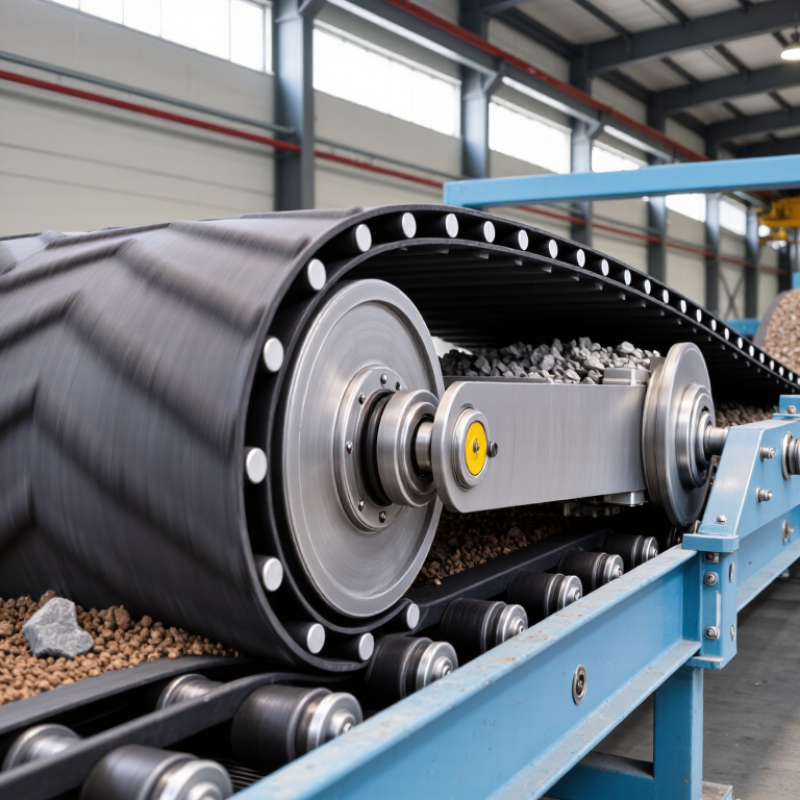
Tip 1: Define the material before selecting a concave herringbone conveyor belt. Record particle size, bulk density, moisture, temperature, abrasiveness, and stickiness. A wet aggregate behaves differently from dry grain. FAO’s 2019 State of Food and Agriculture estimates that 14% of food is lost between harvest and retail. Poor transfer control can increase this loss through spillage, dust, and bruising. Use laboratory samples when possible. Visual guesses are often wrong.
Tip 2: Convert the transport requirement into measurable figures. Specify tonnes per hour, belt width, conveyor length, loading method, incline angle, and required speed. CEMA’s Belt Conveyors for Bulk Materials, 7th Edition, bases capacity calculations on material density, surcharge angle, and belt loading area. The herringbone pattern can improve grip on inclined routes, but it may retain sticky material. Check the actual carrying capacity, not only the catalogue rating. This step is frequently underestimated.
Tip 3: Match the belt profile to the loading and discharge conditions. Large lumps need wider spacing and stronger impact protection. Fine, damp materials may require easier cleaning and controlled belt tension. Measure the largest particle, expected moisture range, and peak loading rate. ISO 5048 conveyor calculations also require attention to resistance, belt tension, and drive power. In practice, a small pilot test can reveal carryback, slippage, or uneven loading before installation. That evidence is more reliable than a perfect spreadsheet.
A concave conveyor changes belt tension across its width. That change becomes sharper in curved or troughed sections. Raised Herringbone Conveyor Belts can improve grip, but the profile must suit the curve. During field inspections, I check the belt while empty and loaded. A belt that tracks well empty may wander after material reaches the outer edge.
Measure the conveyor’s trough angle, curve radius, transition length, and pulley diameter. These dimensions guide the belt’s flexibility and rib height. Tall ribs can hold damp aggregate, yet they may resist bending around a tight curve. Low ribs bend more easily, but fine material can slide sideways. Ask for independent bend and tracking data. Do not rely on catalogue photos alone.
Watch the edge clearance. A raised pattern should not scrape the frame or skirt seals. Run a slow trial with the actual material, including the heaviest expected load. Inspect rib wear, splice movement, and edge lift after several cycles. I once approved a profile that looked suitable on paper, but its stiff edges caused tracking problems. That mistake changed my checklist. Weather, loading impact, and cleaning methods also matter. Recheck the selection when the route changes.
7 Tips for Choosing Concave Herringbone Conveyor Belts
Choose the pattern before choosing the belt. Herringbone grooves should center loose material, resist rollback, and match the conveyor’s incline. A 2024 global conveyor-belt market report estimated the sector at more than USD 4 billion, showing how widely these systems are used. Yet market growth does not remove installation risks.
Tip 1: Match the chevron angle to the incline and material size. Tip 2: Check whether the apex should face belt travel. This depends on the lifting design, not guesswork. Tip 3: Keep groove depth moderate for small, dry particles. Deep grooves can trap material and complicate cleaning. Tip 4: Confirm the belt’s minimum pulley diameter. A rigid concave belt may flex poorly around small pulleys.
Groove direction deserves extra attention. Tip 5: Ask for a direction arrow on the technical drawing. Reversing the belt can increase spillage near loading zones. Tip 6: Test tracking with the belt empty, then loaded. CEMA’s Belt Conveyors for Bulk Materials recommends evaluating belt tension, loading, and alignment together. ISO 5048 also requires conveyor calculations to consider resistance and tension, rather than relying on appearance. Tip 7: Inspect the first transfer point after several operating hours. I have seen a visually correct pattern carry material sideways when the loading chute was slightly off-center. That detail is easy to miss. A short trial run may prevent a costly correction.
Choosing a concave herringbone conveyor belt starts with its material, not its pattern. The belt must match the conveyed product and the working environment.
Start with the material. PVC suits many dry, moderate-duty applications, while polyurethane often handles oil, moisture, and frequent cleaning better. Rubber can provide strong grip, but its compatibility with chemicals requires careful checking. A belt that feels tough in a warehouse may soften near heat or oil.
Not always.
Check tensile strength against the conveyor’s load, incline, belt width, and start-up force. Herringbone ribs create extra grip, yet they also concentrate stress around bends and splices. Review elongation data and confirm the belt can run smoothly over the conveyor’s smallest pulley diameter. A stronger belt is not automatically the right belt.
Surface durability deserves close inspection. Run a fingernail across the rib edges and look for weak bonding or uneven finishing. Ask for abrasion, hardness, and temperature data from reliable technical documentation. In practice, I would test a short belt section with the actual product, especially if sharp cartons, wet produce, or dusty materials are involved.
I once focused too heavily on tensile strength and overlooked surface wear. The belt carried the load, but the ribs rounded sooner than expected. That mistake changed my inspection routine. Check the belt after several operating cycles, not only after installation. Small cracks, polished ribs, or edge lifting may reveal problems before they become costly downtime.
7 Tips for Choosing Concave Herringbone Conveyor Belts
A Herringbone Conveyor should match the real load, not only the catalog rating. Measure the heaviest product, including packaging and moisture. Then add a practical safety margin for starting and stopping. A belt rated for 500 kilograms may perform poorly under repeated shock loads. Check the belt width too. Narrow belts concentrate pressure near the center and may deform sooner.
Traction controls whether products move smoothly on an incline. Examine the herringbone profile, groove depth, and surface hardness. Deeper patterns can improve grip, but they may mark soft goods. Test the belt with the actual product, especially when dust, oil, or condensation is present. Watch the edges. Poor tracking can create rubbing, noise, and uneven wear. Conveyor speed also matters because high speed can reduce control during transfers.
Product stability depends on the concave shape and the belt’s ability to support the load evenly. Place several items across the belt, then observe shifting at curves and loading points. Small packages may settle well, while tall containers can lean or tip. During commissioning, I would inspect the belt after several hours, not just during a short trial. That extra check often reveals stretching or tracking problems. One detail is easy to miss: cleaning access. A belt that grips well but is difficult to clean may increase maintenance time and reduce dependable performance.
| No. | Selection Tip | Key Dimension to Check | Typical Engineering Reference | Why It Matters | Practical Selection Guidance |
|---|---|---|---|---|---|
| 1 | Match the belt to the total load | Rated belt tension and load per metre | Calculate the operating load in kg/m and select a belt with a rated tension comfortably above the calculated requirement; a safety factor of about 1.2–1.5 is commonly used for steady-duty applications. | Insufficient capacity can cause belt stretching, mistracking, splice failure, or premature damage. | Include product weight, belt weight, incline resistance, loading impact, and acceleration when calculating the required capacity. |
| 2 | Choose the correct herringbone profile | Cleat height, pitch, angle, and pattern depth | Low profiles around 10–20 mm suit small or fragile products; medium profiles around 20–35 mm provide increased grip for general conveying; higher profiles may be required for bulk material on steeper inclines. | The pattern controls traction, product containment, noise, and the risk of product marking. | Use a finer pattern for small items and a deeper, wider pattern for heavier or less stable loads. Confirm that the profile does not interfere with guide rails or transfer points. |
| 3 | Verify traction on the incline | Surface coefficient of friction and incline angle | For many dry rubber-to-product contacts, the practical friction range is approximately 0.3–0.6, but the actual value varies significantly with moisture, dust, oil, material type, and surface finish. | Higher effective traction reduces rollback, sliding, product collision, and uneven spacing. | Test the actual product on the belt under operating conditions. Do not select a belt based only on the dry laboratory friction value. |
| 4 | Check product stability in the concave trough | Trough depth, belt width, side support, and product center of gravity | Common conveyor belt widths range from approximately 300–1,200 mm. The usable conveying width is narrower than the physical belt width when side guides or a deep trough are used. | A suitable concave profile helps keep loose or irregular products centered and reduces spillage at the edges. | Allow adequate clearance between the product envelope and the side guides. Validate stability during starts, stops, speed changes, and belt loading. |
| 5 | Select the right belt material | Temperature, oil resistance, abrasion resistance, and food-contact requirements | PVC is commonly used for general indoor conveying; polyurethane is often selected where cleaning, abrasion, or food-contact performance is important; rubber is frequently used for demanding impact and bulk-material service. | The wrong cover material can harden, swell, crack, lose traction, or contaminate the conveyed product. | Specify the normal and peak temperature, exposure to oils or chemicals, washdown method, and any applicable hygiene or regulatory requirements. |
| 6 | Confirm speed and pulley compatibility | Belt speed, minimum pulley diameter, and drive arrangement | Many unit-handling conveyors operate around 0.1–1.0 m/s, while the permissible speed depends on the product, belt construction, cleat profile, tracking system, and drive. The minimum pulley diameter must follow the belt construction specification. | Excessive speed or an undersized pulley can increase vibration, bending stress, product movement, and belt fatigue. | Check the belt supplier’s minimum pulley diameter, recommended speed range, splice type, and compatibility with crowned or grooved pulleys. |
| 7 | Plan tracking, cleaning, and maintenance | Tracking method, belt thickness, splice design, and cleaning access | Routine checks should include belt alignment, tension, splice condition, profile wear, material buildup, and pulley cleanliness. Inspection frequency should increase in abrasive, wet, oily, or high-cycle applications. | Good maintenance preserves traction and product stability while reducing unplanned downtime. | Provide accessible tracking adjustment, suitable scrapers or brushes, drainage where needed, and a replacement plan based on wear rate rather than calendar age alone. |
Note: The values shown are typical engineering reference ranges for preliminary selection only. Final belt specification should be confirmed using the actual product, conveyor geometry, loading conditions, operating environment, and belt-construction data.
7 Tips for Choosing Concave Herringbone Conveyor Belts
Confirm dimensions before discussing belt grades. Measure belt width, center distance, trough angle, pulley diameters, and take-up travel on site. A few millimeters can create tracking problems. Small errors multiply. For Ep Conveyor Belts, also verify the carcass strength and belt thickness against the calculated tension. ISO 14890 defines requirements for rubber and plastic conveyor belts, including construction, testing, and marking. Use it as a technical baseline, not a substitute for field measurements.
Installation fit matters just as much. Check whether the herringbone pattern suits the material flow and conveying direction. Confirm splice space near transfer points. Inspect skirt clearance, idler alignment, and pulley lagging before delivery. The 2024 OSHA enforcement summary again listed machine guarding among the Top 10 violations. Safe access around nip points should be planned with the belt, not added later. I have seen good belts fail because the frame was not square.
Maintenance needs should shape the final choice. Review material abrasiveness, oil exposure, moisture, loading impact, and cleaning frequency. The U.S. Bureau of Labor Statistics reported 2.6 million nonfatal workplace injuries and illnesses in 2023, reinforcing the value of safer, controlled maintenance routines. Specify inspection intervals for edge wear, cover cuts, splice condition, and belt tension. Keep spare fasteners and cleaning tools nearby. Measure twice. Even experienced teams sometimes underestimate buildup under the return side. That mistake deserves a checklist.
Recommended inspection intervals help confirm belt dimensions, installation fit, tracking, splice condition, and maintenance requirements before and after commissioning.
The intervals shown are practical maintenance planning targets. Actual frequencies should be adjusted for belt load, material abrasiveness, operating hours, moisture, temperature, and the conveyor manufacturer’s instructions.
Choosing a concave herringbone conveyor belt requires more than matching width and length. The supplier’s technical knowledge matters. Ask for test data on traction, flex fatigue, oil resistance, and splice strength. Request samples and inspect the belt under real loading conditions. A belt may look precise on a workbench, yet track poorly around a curved conveyor.
Compare suppliers by their engineering support, production consistency, and response time. Reliable suppliers explain material grades, tooth geometry, and acceptable temperature ranges without vague promises. Ask whether they can produce Cc56 Conveyor Belts with reinforced edges, special widths, modified herringbone patterns, or different cover compounds. Customization should solve a measured problem, not add attractive features. Keep drawings, tolerance limits, and inspection records in writing.
Price deserves a wider lens. Include installation, tensioning tools, planned downtime, cleaning labor, replacement frequency, and shipping damage risk. A cheaper belt can become expensive after repeated tracking adjustments. I have seen buyers focus on the first invoice and overlook two hours of weekly maintenance. That judgment needs questioning. Ask suppliers for a total-cost estimate based on your load, speed, material, and operating hours. Compare warranty terms carefully, especially exclusions for misalignment or incorrect tension. Small details matter. A practical trial run may reveal more than a polished quotation.
PVC-PU lightweight conveyor belts are designed for efficient material handling where flexibility, cleanliness, and moderate load capacity are important. PVC belts are commonly selected for general conveying, packaging, warehousing, and assembly lines, while PU belts are well suited to food-related processing, pharmaceutical handling, and applications requiring good oil resistance and easy cleaning. Their lightweight construction reduces energy consumption, simplifies installation, and allows smooth operation around pulleys and transfer points.
A typical belt contains three functional layers. The top cover is made with different materials, thicknesses, and surface patterns to provide the required grip, chemical resistance, wear resistance, and mechanical performance. The central fabric layer supplies tensile strength and strongly affects the belt’s load capacity, elongation, tracking, static behavior, surface smoothness, and ability to pass over knife-edge transfers. The bottom layer is engineered to reduce operating noise, resist wear, and maintain compatibility with support plates, rollers, or shafts.
When selecting a PVC-PU belt, users should first consider the conveyed product, operating temperature, belt speed, tension, incline, and cleaning conditions. Surface patterns should match the need for smooth transport or increased traction, while the fabric structure must suit the expected load and turning method. A properly designed bottom surface can improve tracking, reduce friction, and extend service life. The right combination of cover material, reinforcement, thickness, and profile helps achieve stable conveying performance with lower maintenance requirements.
Measure belt width, center distance, trough angle, pulley diameters, and take-up travel on site. A few millimeters can affect tracking.
Match carcass strength and belt thickness to calculated tension. A belt that looks strong may still stretch under heavy loading.
Confirm conveying direction, herringbone pattern, splice space, skirt clearance, idler alignment, and pulley lagging before delivery.
A frame that is not square can create tracking problems. Good belts sometimes fail because the structure was overlooked.
Review abrasiveness, oil exposure, moisture, impact at loading points, temperature, and cleaning frequency. Real material behavior matters more than appearance.
Inspect edge wear, cover cuts, splice condition, belt tension, and buildup under the return side. Keep cleaning tools nearby.
Compare engineering support, test data, production consistency, customization limits, and response time. Vague promises deserve careful questioning.
Custom widths, reinforced edges, or altered patterns should address measured problems. Extra features may look useful but increase cost without improving performance.
Include installation, tensioning tools, downtime, cleaning labor, replacement frequency, shipping risks, and maintenance hours. The first invoice is not the whole cost.
Yes. Test the belt under real loading and observe tracking around curves. A short trial can reveal problems missed on a workbench.
Choosing the right Concave Herringbone Conveyor Belts begins with understanding the material being transported, its weight, size, shape, and handling conditions. The belt profile should match the conveyor’s curved sections to maintain smooth movement and prevent product shifting. It is also important to select a suitable herringbone pattern and groove direction based on the required conveying angle, flow direction, and drainage needs.
When comparing options, evaluate the belt material, tensile strength, wear resistance, and surface durability for the working environment. Load capacity, traction, and product stability should be checked to ensure safe and consistent operation. Before purchase, confirm the belt’s dimensions, installation compatibility, tracking requirements, and maintenance needs. Finally, compare suppliers according to customization capabilities, technical support, service life, replacement convenience, and total operating cost. A well-balanced choice can improve conveying efficiency, reduce downtime, and provide reliable long-term performance.