+86 18920794106
Leave Your Message
-
Contact WhatsApp
-
 Contact Phone
-
 Contact Email
Deciding which of the top 10 tubular conveyor belts to go for isn’t just about checking out the specs in a catalog. Honestly, there’s a bit more to it. Buyers around the world need to consider things like what the belt is made of, how far it needs to move materials, the diameter of the belt, how much it can handle at once, the conditions it’ll face, and how easy it is to do maintenance. For example, a system that moves limestone over a dry quarry site is gonna have quite different needs compared to one designed to carry fertilizer through a humid port.
Tubular conveyor belts are pretty clever—they keep your materials inside a sealed pipe, which helps cut down on spills, dust, and contamination, especially when the route is complex. But, let’s be real—just because a belt looks good on paper doesn’t automatically mean it’s the best fit. Their actual performance depends on factors like how flexible the belt is, how much rolling resistance they’ve got, whether the idlers are aligned properly, how the transitions are designed, and if the cleaning process works well. Even tiny design slips can turn into costly issues down the line.
Todd Swinderman, who’s actually quite well-known as an expert in conveyor safety and bulk materials, once said, There’s no such thing as a maintenance-free conveyor. And honestly, it’s something to keep in mind. Even top-notch belts from big names like Bridgestone, Continental, Fenner Dunlop, or Yokohama need regular checks, proper tensioning, and maintenance. This guide isn’t about picking a certain brand as the ultimate winner but rather comparing ten of the leading options based on real-world criteria—things like belt construction, rubber quality, how hot or cold they can run, energy use, support services, and overall ownership costs.
Remember, real-life projects rarely go perfectly. Data from tests can vary depending on conditions, and support in your region can tip the scales when you’re making a decision. A belt that performs flawlessly in the lab might let you down if spare parts get delayed or support is slow. So, this overview doesn’t claim one brand is universally better than the others. Instead, it points out where each might work best, highlights potential pitfalls, and suggests questions you should ask yourself before choosing a system. At the end of the day, making the right call still comes down to careful judgment.
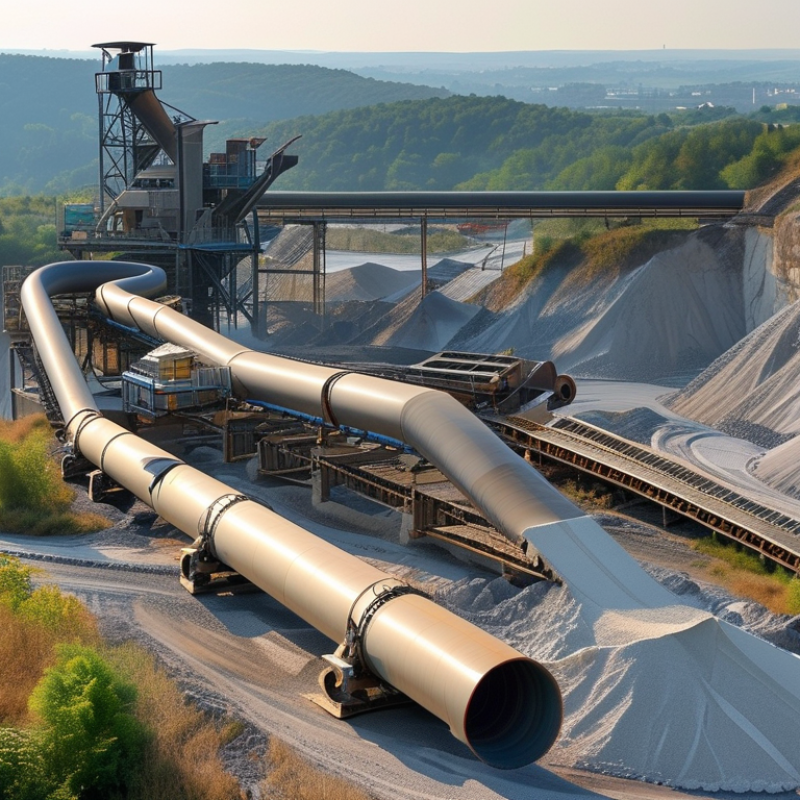
Tubular conveyor belts use a flexible belt to form a closed pipe around bulk material. Their design limits dust release, rain exposure, and material loss during transport. The belt opens at the loading point, then folds through transition idlers. Six-roll idler sets commonly create the circular section. At discharge, the belt gradually opens again. That matters.
Grand View Research valued the global conveyor belt market at USD 4.30 billion in 2022. It forecasts a 4.9% compound annual growth rate through 2030. MarketsandMarkets projected the global conveyor system market could reach USD 10.6 billion by 2028. These figures show demand, but they do not prove that every site needs a tubular design. Selection still depends on material, route, moisture, capacity, and maintenance access.
Operating performance depends on belt tension, pipe diameter, speed, fill ratio, and bulk density. CEMA’s Belt Conveyors for Bulk Materials provides calculation methods for capacity, power, and belt tensions. ISO 14890 supports requirements for conveyor belting dimensions and testing. In practice, transition length is critical. Too short, and the belt may fold unevenly. Too long, and the conveyor needs extra space. Curves also require careful tension analysis. Wet fines can cling inside the pipe, increasing cleaning time. Small details matter. A theoretically efficient system may still disappoint when inspection points are difficult to reach.
| Rank | Tubular Belt Configuration | Best For | Typical Pipe Diameter | Typical Capacity | Typical Belt Speed | Suitable Materials | Key Structure | Operating Principle | Main Selection Advantage |
|---|---|---|---|---|---|---|---|---|---|
| 1 | High-Tension Steel-Cord Tubular Belt | Long-distance and high-capacity bulk conveying | 250–800 mm | 500–4,000 t/h | 2.0–5.0 m/s | Iron ore, limestone, coal, clinker, aggregates | Steel cords embedded longitudinally with abrasion-resistant rubber covers | The belt is loaded flat, shaped into a tube by overlapping edges, and held closed by idler sets. Steel cords carry the main tensile load. | High tensile strength, low elongation, and strong suitability for long conveyor routes |
| 2 | Fabric-Reinforced Tubular Belt | Medium-length systems and moderate material flow | 150–600 mm | 100–1,500 t/h | 1.5–4.0 m/s | Grain, fertilizer, sand, wood chips, packaged bulk materials | Multiple polyester or nylon textile plies with rubber covers | Textile plies provide flexibility while the belt forms a closed pipe around the conveyed material. | Flexible construction, relatively simple installation, and practical cost for general-duty conveying |
| 3 | High-Abrasion-Resistance Tubular Belt | Sharp, abrasive, or high-impact bulk solids | 200–700 mm | 300–3,000 t/h | 1.5–4.5 m/s | Crushed rock, quartz, ore, glass cullet, sintered material | Wear-resistant rubber cover supported by fabric or steel-cord reinforcement | The enclosed belt limits spillage while the reinforced cover resists sliding abrasion and impact at loading points. | Longer cover life in severe abrasive service when correctly specified |
| 4 | Oil- and Grease-Resistant Tubular Belt | Materials containing oils, fats, or hydrocarbon residues | 150–500 mm | 100–1,200 t/h | 1.0–3.5 m/s | Oilseed meal, petroleum coke, oily minerals, recycled materials | Oil-resistant elastomer cover with textile or steel-cord carcass | The belt maintains its tubular shape while the cover resists swelling, softening, and loss of adhesion caused by oils. | Better resistance to oil-related deterioration than standard rubber covers |
| 5 | Heat-Resistant Tubular Belt | Hot materials and elevated ambient-temperature zones | 200–600 mm | 200–2,000 t/h | 1.0–3.5 m/s | Cement clinker, foundry sand, hot ash, sintered products | Heat-resistant rubber compound with temperature-rated carcass and bonding layers | The enclosed belt transports hot material while the heat-rated cover limits hardening, cracking, and separation. | Suitable for controlled high-temperature service when material temperature is verified |
| 6 | Flame-Retardant Tubular Belt | Underground, enclosed, or fire-sensitive industrial environments | 150–600 mm | 150–1,800 t/h | 1.0–3.5 m/s | Coal, biomass, wood pellets, industrial mineral products | Flame-retardant cover compound with suitable carcass and electrical-property controls | The belt conveys material in a closed configuration and is specified to reduce flame propagation risk. | Improved fire-safety performance when selected and tested to the required local standard |
| 7 | Food-Grade Tubular Belt | Enclosed conveying in food and agricultural processing | 100–400 mm | 50–800 t/h | 0.5–2.5 m/s | Grain, flour, sugar, salt, seeds, animal-feed ingredients | Low-contamination cover compound with smooth, cleanable surfaces and approved belt components | The belt forms a closed tube that helps protect the product from external contamination and windborne debris. | Improved product containment and hygiene potential with appropriate cleaning procedures |
| 8 | Low-Temperature Tubular Belt | Cold regions, outdoor terminals, and refrigerated process areas | 150–500 mm | 100–1,200 t/h | 1.0–3.0 m/s | Fertilizer, coal, grain, salt, frozen or chilled bulk products | Cold-flexible rubber compound with carcass materials selected for low-temperature bending | The belt remains flexible during start-up and tube formation, reducing the risk of cracking in cold conditions. | More reliable bending and sealing performance in sub-zero operating environments |
| 9 | Cleated or Corrugated-Sidewall Tubular Belt | Steep inclines, compact layouts, and controlled elevation changes | 100–350 mm | 50–600 t/h | 0.5–2.5 m/s | Grain, pellets, fertilizer, packaged goods, light aggregates | Profiled surface, cleats, or sidewall elements combined with a flexible belt body | Cleats increase the belt’s carrying effect and help limit material rollback on inclined sections. | Can reduce conveyor footprint where horizontal space is limited |
| 10 | Low-Noise and Low-Rolling-Resistance Tubular Belt | Urban, indoor, energy-conscious, and environmentally sensitive installations | 150–500 mm | 100–1,500 t/h | 1.0–4.0 m/s | Grain, pellets, limestone, cement raw materials, general bulk solids | Optimized carcass, flexible cover, correctly aligned idlers, and low-resistance rolling components | Idler sets support the tubular belt while optimized belt flexibility and alignment reduce rolling resistance and noise. | Potentially lower operating energy and improved environmental performance |
Rubber lifting conveyor belts are industrial components designed for bucket elevators, where they serve as the traction element that carries buckets upward and transports bulk materials between different levels. Their rubber surface provides flexibility, grip, and protection against impact, while the internal core determines their strength and operating range. Fabric-core belts are suitable for many standard lifting duties and offer convenient flexibility. Steel-cord-core belts provide higher tensile strength and dimensional stability for taller elevators, heavier loads, and demanding continuous operation.
These belts are used in grain handling, mining, cement production, fertilizer processing, and other bulk-material applications. Their enclosed vertical conveying arrangement saves floor space and helps reduce material spillage. Properly selected rubber compounds can also improve resistance to abrasion, heat, and mechanical stress, extending service life and reducing maintenance interruptions. Belt width, thickness, bucket spacing, belt speed, lifting height, pulley diameter, and fastening method should be considered during system design.
Selection should match the belt to both the conveyed material and operating temperature. Strong-wear D-type belts are intended for highly abrasive materials, while moderate-wear L-type belts suit less aggressive loads and general handling. T-type heat-resistant belts are designed for high-temperature materials and should be chosen according to the actual thermal conditions. Correct tension, alignment, bucket attachment, and routine inspection are essential for stable performance, especially where heavy loads or elevated temperatures are involved.
Confirm pipe diameter, material density, moisture, temperature, and transfer-point layout. Small measurement errors can create wrinkles and unstable tube formation.
Poor alignment can cause edge stress, tracking problems, and premature wear. Catalogue ratings cannot correct an unsuitable installation.
Trained technicians should handle both tasks. They should check pulley alignment, idler spacing, clamp pressure, and tracking at low speed.
Inspect the cover, splice, carryback, and vibration regularly. Watch the return section closely. It may reveal tension problems early.
Record measurements, photographs, unusual conditions, and corrective actions. A shared maintenance log improves consistency across different locations.
Keep spare fasteners, repair materials, and approved tools nearby. Store belts indoors, away from sunlight, oil, and sharp edges.
Request installation drawings, torque values, inspection intervals, emergency contacts, and written response times. Avoid vague promises.
Include joining, testing, packing, inland transport, freight, insurance, duties, installation, and replacement access. Compare delivered cost, not meter price alone.
Rolled belts may need special handling. Crates, unloading equipment, warehouse charges, moisture protection, and destination fees can increase costs.
Request splice samples, test data, similar-condition references, and pre-shipment inspection. Check thickness, edge quality, labels, and package dimensions.
Yes. Freight rates, currency changes, humidity, and emergency replacements remain difficult to predict. My earlier budget missed unloading charges. It looked minor. It was not.
Tubular Conveyor Belts provide an enclosed and efficient solution for transporting bulk materials while reducing dust, spillage, moisture exposure, and product contamination. This summary examines their tubular design, belt structure, forming process, and operating principles, then compares key performance criteria such as capacity, conveying distance, belt strength, flexibility, energy use, and environmental resistance. It also presents ten practical belt options for global buyers, organized by material, load requirements, and application conditions.
The guide explains how to select suitable Tubular Conveyor Belts for mining, ports, power generation, agriculture, construction, and other industries. It also covers manufacturer evaluation, quality certifications, production consistency, export experience, technical support, installation, maintenance, spare parts, and after-sales service. Finally, buyers will learn how to assess total ownership cost, packaging, shipping, delivery schedules, customs preparation, and long-term reliability before making a confident purchasing decision.